
ADVERTISEMENT
Practical Habits for Better Pastry Results
The pastry blender works best when paired with a few consistent habits:
Keep ingredients cold
Cold butter supports flakiness. Chilling flour and tools may help maintain temperature.
Work quickly
Stop early
A crumbly mixture is ideal. Smooth paste usually means overmixing.
These habits may support more predictable pastry textures without requiring advanced skills.
Common Mistakes When Using a Pastry Blender
Beginners sometimes apply too much pressure. Heavy force flattens butter instead of dividing it. Gentle, repeated rocking is more effective.
Another mistake is blending until uniform. Visible small fat pieces are desirable. They contribute to structure during baking.
Finally, warm kitchens can complicate pastry work. If butter softens, chilling the mixture briefly may help restore workable texture.
Pastry Blender vs. Modern Appliances
Food processors and stand mixers can perform similar tasks. They offer speed, but they reduce tactile control. Machines can overmix in seconds, especially for beginners.
A pastry blender provides slower feedback. Bakers can observe texture changes and stop at the right moment. Many professionals still rely on manual blending for delicate doughs.
Both methods can work. The difference lies in control and sensitivity to texture.
Caring for a Vintage Pastry Blender
The wooden handle should be wiped with a damp cloth and dried immediately. Occasional mineral oil may help prevent drying. Avoid soaking wood in water.
Metal blades should be washed with mild soap and dried thoroughly. Proper care supports long-term durability and safe kitchen use.
A well-maintained pastry blender can remain functional for decades.
FAQ: Understanding This Classic Baking Tool
Is a pastry blender necessary for beginners?
It isn’t required, but it may make pastry techniques easier to learn.
Can I substitute with forks or knives?
Forks and knives can work, though they often require more effort and less consistency.
Does a pastry blender improve results?
It supports even blending and temperature control, which may contribute to better texture.
Are modern versions different?
Most modern pastry blenders follow the same basic design because the original structure remains effective.
When a Kitchen Tool Becomes a Family Heirloom
Using an inherited baking tool connects present kitchens to past hands. Each pastry made with it continues a quiet lineage of practice. The value isn’t only practical. It’s emotional and cultural.
A Calm Conclusion
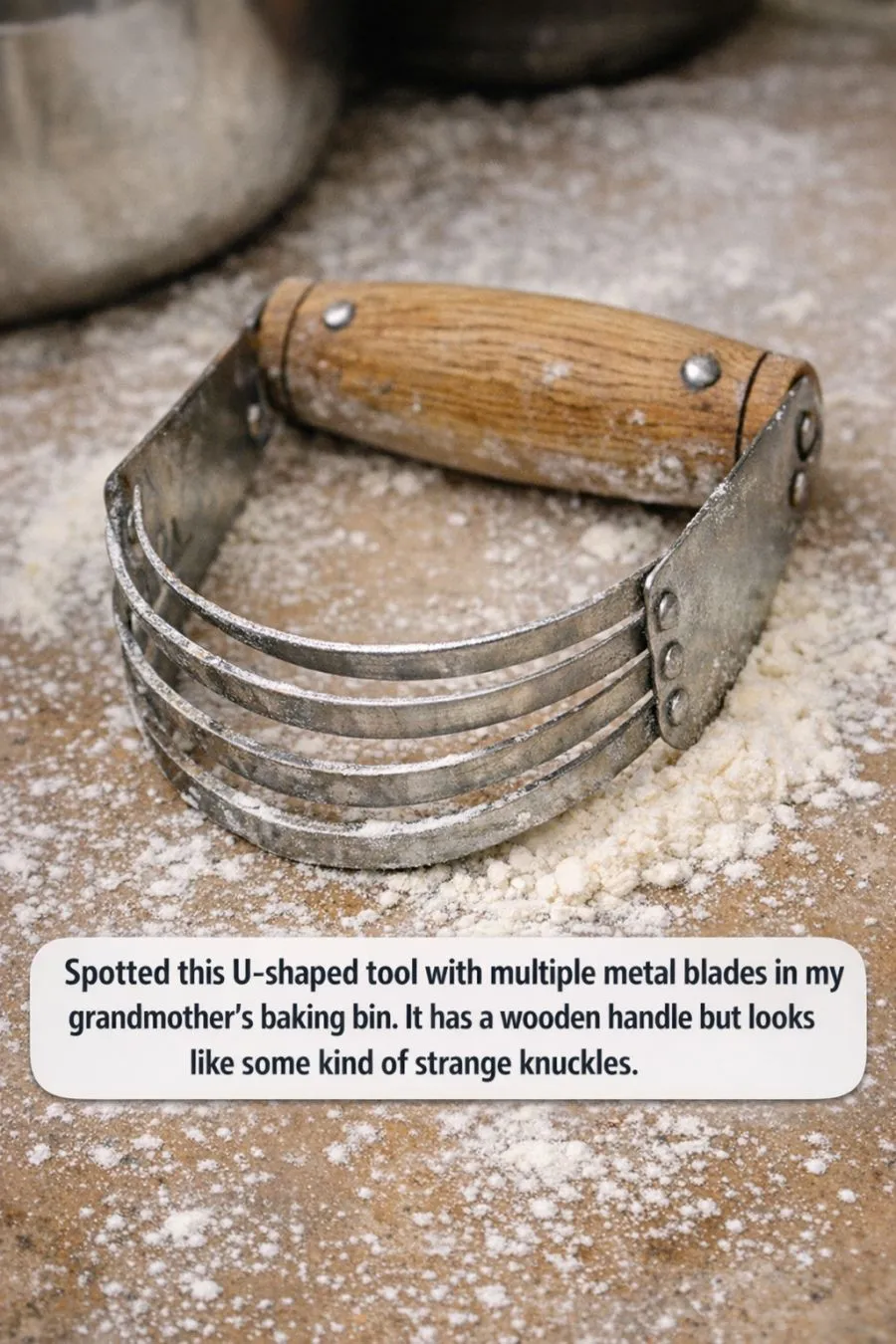
The U-shaped tool that first looked strange turns out to be a simple instrument built for precision. Its purpose is humble but important: supporting texture, preserving technique, and encouraging mindful baking.
Rediscovering tools like the pastry blender reminds us that good results often come from controlled, deliberate motion rather than speed alone. It’s a small lesson in patience and craftsmanship, wrapped inside a wooden handle and a few metal blades.
And sometimes, the most interesting objects in a kitchen aren’t new inventions. They’re the ones that quietly kept generations baking long before we thought to question how.
ADVERTISEMENT
