
ADVERTISEMENT
Most people focus on their face when they think about aging.
But the neck often shows changes even earlier.
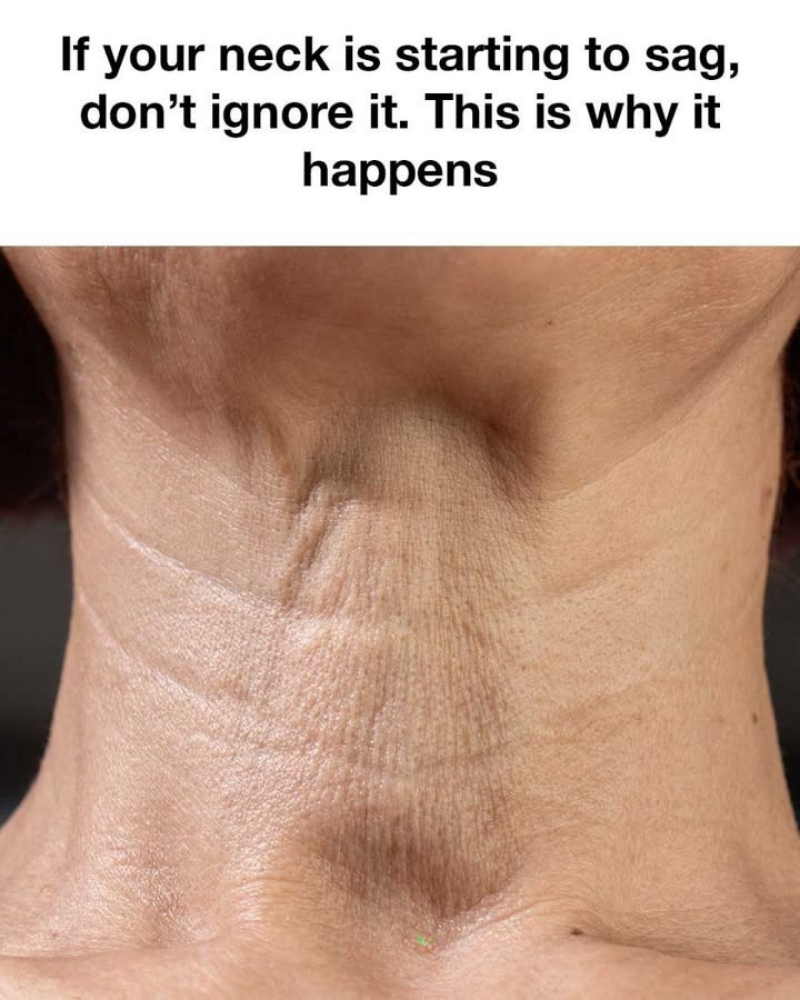
Neck sagging isn’t caused by just one factor. It’s usually the result of several overlapping changes in skin structure, muscle tone, and lifestyle habits.
Let’s break it down.
1. The Anatomy of the Neck
The neck is built differently from other areas of the body.
It contains:
- Thinner skin
- Less oil production
- The platysma muscle (a broad, thin muscle running from chest to jaw)
- Fewer supportive fat pads than the face
Because the skin here is thinner and more delicate, it tends to lose firmness faster.
Two key proteins — collagen and elastin — give skin its strength and bounce. Over time, production of both naturally declines.
When collagen decreases, skin becomes looser.
When elastin weakens, skin doesn’t “snap back” as easily.
2. Aging and Collagen Loss
Aging plays a central role.
This gradual loss leads to:
- Reduced firmness
- Fine lines
- Thinning skin
- Mild sagging
At the same time, supportive fat in the lower face and neck may shift or decrease, changing contours.
These changes are normal — but they can become more noticeable if other factors are present.
3. Sun Exposure Accelerates the Process
Ultraviolet (UV) exposure is one of the strongest external contributors to skin aging.
Long-term sun exposure damages collagen fibers and weakens skin support. This process, often called photoaging, can significantly affect the neck.
In fact, visible aging is often strongly linked to cumulative sun damage over decades.
If sunscreen stops at the jawline, the neck may age faster than the face.
4. Genetics Matter
Some people naturally experience earlier skin laxity due to inherited traits.
Genetics influence:
- Skin thickness
- Collagen production rates
- Fat distribution
- Response to environmental stress
While genetics can’t be changed, early preventive care can support healthier skin longer.
5. Weight Fluctuations
Rapid weight gain stretches skin.
Rapid weight loss may leave loose skin behind — especially if elasticity is already reduced.
Repeated fluctuations can make the neck appear less firm over time.
Maintaining a stable, healthy weight allows skin to adapt gradually.
6. Hydration and Skin Elasticity
Well-hydrated skin appears smoother and more resilient.
Dehydration doesn’t directly cause sagging, but it can make fine lines and laxity look more pronounced.
Supporting hydration includes:
- Drinking adequate fluids
- Using moisturizers
- Applying ingredients like hyaluronic acid
Healthy skin barrier function supports elasticity.
— See Next Page —
ADVERTISEMENT
