
ADVERTISEMENT
Practical Habits for Better Results
Small adjustments support consistency and texture.
Leave the fat intact
Fat renders slowly and contributes richness. You can skim excess at the end if desired.
Choose waxy potatoes
Resist lifting the lid
Each time the lid is removed, heat escapes and cooking time increases.
Cook low when possible
Longer, gentler heat helps connective tissue soften more effectively.
These habits require no extra effort—just patience.
Common Mistakes to Avoid
Using lean cuts
Sirloin or very lean beef can become dry and stringy.
Overfilling the slow cooker
Leave space for gentle simmering.
Adding too much extra liquid
The meat and vegetables release moisture during cooking.
Expecting quick tenderness
If meat isn’t tender yet, it likely needs more time—not higher heat.
Slow cooking rewards steadiness.
Optional Variations (Without Complicating Things)
- Add fresh thyme or rosemary
- Substitute one cup of broth with red wine
- Add sliced mushrooms
- Stir in a splash of balsamic vinegar
- Include parsnips or turnips for variation
These changes are optional, not necessary.
Storage and Reheating
Refrigerator
Store in an airtight container up to four days. Flavor often deepens overnight.
Reheat
Warm gently on the stovetop over medium-low heat. Add a splash of broth if needed.
Microwave individual portions, stirring halfway through.
Freezer
Freeze for up to three months. Thaw overnight in the refrigerator before reheating.
Planning ahead reduces food waste and supports efficient meal routines.
FAQ
Do I need to brown the meat first?
No. Browning adds flavor but is not required for this recipe to work well.
Can I double the recipe?
What if the stew seems thin?
Mash a few potatoes against the side of the cooker or simmer uncovered briefly.
Can I add more vegetables?
Yes. Firmer vegetables should go in at the start. More delicate ones can be added later.
A Calm, Reliable Conclusion
This slow cooker beef stew succeeds because it respects your time. It doesn’t require precision or advanced technique. It asks for patience and gives back warmth, depth, and consistency.
Some meals impress with complexity. Others endure because they fit real life.
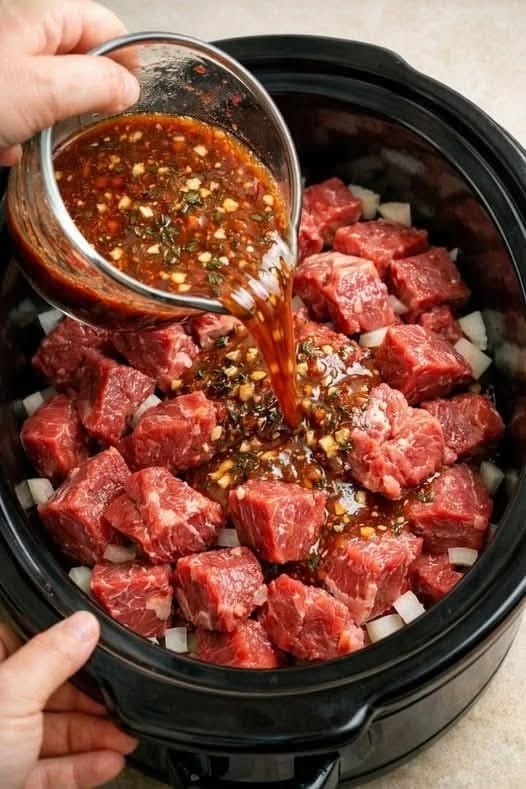
Layer. Pour. Let time work.
And when dinner is ready without stress, that quiet reliability may be the most comforting part of all.
ADVERTISEMENT
