
ADVERTISEMENT
Do All Condiments Really Need Refrigeration?
Open almost any refrigerator door and you’ll see it: shelves packed with bottles, jars, and sauces. Many people refrigerate condiments automatically, assuming cold storage always equals safer storage. In reality, some condiments are naturally shelf-stable and may keep their flavor and texture better at room temperature.
The reason comes down to chemistry. High salt, sugar, or acid levels act as natural preservatives. Fermentation also plays a role. These conditions make it difficult for harmful microbes to grow. Refrigeration isn’t always harmful, but it isn’t always necessary either.
Below are commonly debated condiments that many households safely store at room temperature when handled properly.
Condiments That Naturally Resist Spoilage
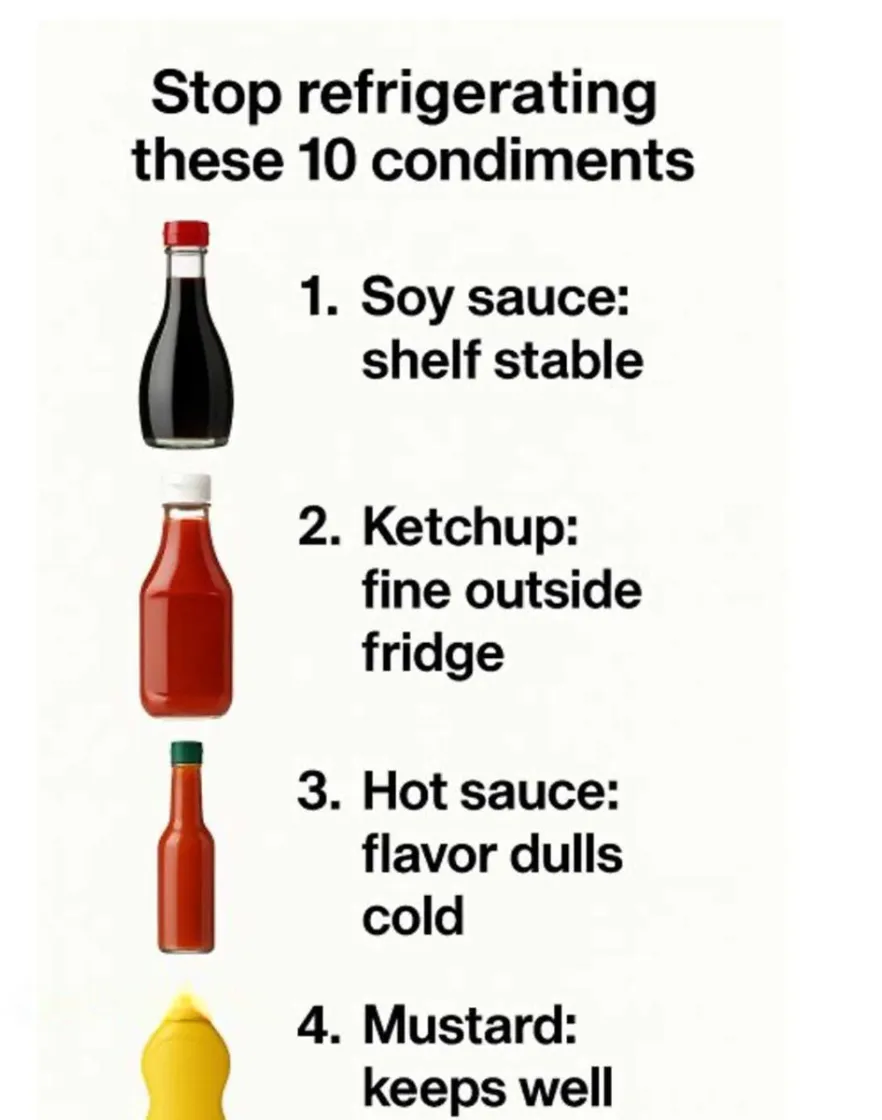
Soy sauce contains high salt levels and is fermented. Those traits support long shelf stability. A cool, dark pantry helps preserve its flavor.
Hot sauce is usually vinegar-based. The acidity acts as a preservative. Most varieties remain stable at room temperature, though fruit-heavy blends may benefit from refrigeration.
Mustard relies on vinegar and natural antimicrobial compounds from mustard seeds. It holds well in a pantry for weeks when sealed tightly.
Honey is one of the most stable foods known. Its low moisture prevents microbial growth. Refrigeration may cause crystallization without improving safety.
Vinegar is inherently acidic and shelf-stable. It can remain at room temperature indefinitely when stored away from heat and light.
Worcestershire sauce combines vinegar, molasses, and salt. These ingredients support long storage without refrigeration.
Each of these condiments depends more on sealing and cleanliness than temperature alone.
Condiments That Can Stay Out — With Caveats
Ketchup has enough acidity to remain safe at room temperature for short periods, especially in households that use it quickly. Slow use favors refrigeration for flavor preservation.
Peanut butter doesn’t require refrigeration for safety, but natural varieties may separate. Pantry storage supports spreadability.
Olive oil should stay cool and dark, but not refrigerated. Cold temperatures cloud the oil and affect texture. A cupboard works better.
Jam and preserves rely on sugar as a preservative. They may sit out briefly after opening but last longer when refrigerated.
Maple syrup can stay in the pantry unopened. Once opened, refrigeration helps prevent mold, especially if stored long term.
The difference between “safe” and “best quality” matters. Some condiments remain safe at room temperature but retain taste longer when chilled.
— See Next Page —
ADVERTISEMENT
