
ADVERTISEMENT
Safe At-Home Care While You Wait
If you can’t see a doctor right away, focus on protecting the area.
1. Keep It Clean
Wash gently with a mild, fragrance-free cleanser and lukewarm water.
2. Moisturize Regularly
Apply a fragrance-free moisturizer to support the skin barrier.
If the area is cracked, a thin layer of petroleum jelly may help reduce irritation.
3. Protect From Sun Exposure
Apply broad-spectrum sunscreen (SPF 30 or higher) daily to exposed areas.
Reapply if outdoors.
Sun protection may help prevent further irritation or progression.
4. Do Not Pick
Picking delays healing and increases infection risk.
Allow scabs to fall off naturally.
5. Monitor Changes
Track:
- Size
- Color
- Texture
- Bleeding
- Pain
Red-Flag Symptoms That Need Prompt Care
Even if appointments are limited, seek urgent care if you notice:
- Rapid growth
- Severe pain
- Persistent bleeding
- Pus or signs of infection
- Significant swelling
- Fever
These symptoms may require quicker evaluation.
How Dermatologists Evaluate These Spots
When you’re able to be seen, evaluation usually includes:
- Visual examination
- Dermatoscope inspection
- Possible skin biopsy if needed
A biopsy involves removing a small sample for laboratory review.
If actinic keratosis is confirmed, treatments may include:
- Cryotherapy (freezing)
- Topical medications
- Photodynamic therapy
If early skin cancer is detected, treatment is typically straightforward when caught early.
Prevention Moving Forward
Regardless of the diagnosis, protecting your skin supports long-term health.
- Daily sunscreen use
- Wearing hats and protective clothing
- Avoiding tanning beds
- Seeking shade during peak sun hours
- Regular skin self-checks
Early awareness makes a difference.
Questions to Ask at Your Appointment
When you’re finally seen, consider asking:
- What is the likely cause?
- Is a biopsy necessary?
- What treatment options are available?
- What should I watch for at home?
- How often should I follow up?
Understanding your condition helps reduce uncertainty.
A Calm, Practical Perspective
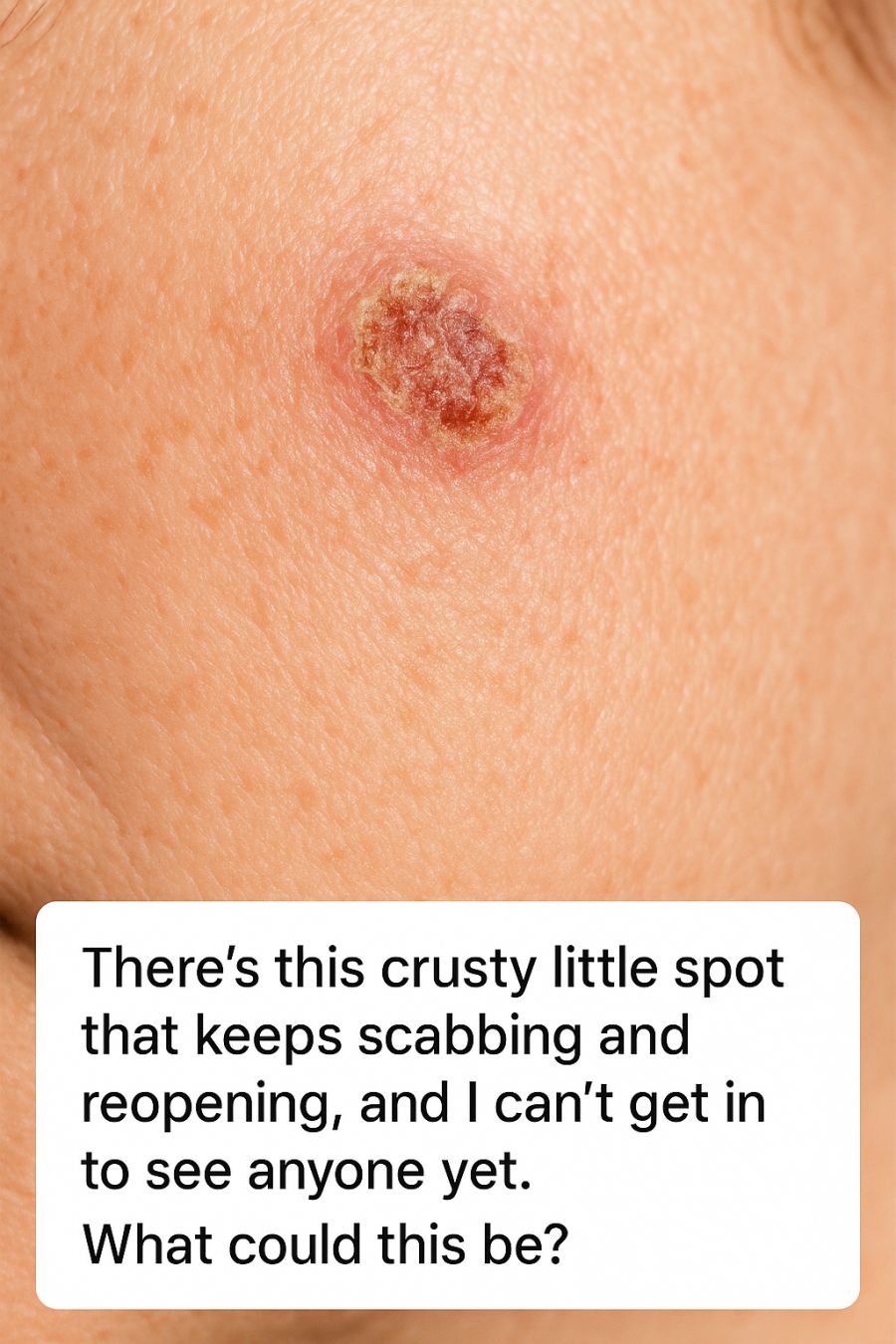
A crusty spot that repeatedly scabs and reopens is not something to ignore—but it’s also not something to panic over.
Many such lesions are manageable and treatable, especially when identified early.
In the meantime:
- Keep it protected
- Avoid harsh treatments
- Watch for changes
- Prioritize sun protection
And when you’re able to see a healthcare professional, you’ll be prepared with informed questions and careful observations.
Paying attention without assuming the worst is often the most balanced approach.
ADVERTISEMENT
