
ADVERTISEMENT
Gentle Habits That May Support Skin Protection
While bruising can’t always be prevented, small habits may help reduce stress on fragile skin.
Protect arms from bumps
Long sleeves or light compression garments can cushion contact with surfaces.
Use daily sunscreen
Moisturize consistently
Hydrated skin tends to be more flexible and less prone to tearing.
Maintain balanced nutrition
Vitamin C, protein, and healthy fats support tissue maintenance.
These habits don’t cure bruising. They support the skin environment.
What Social Media Gets Wrong
Online “bruise hacks” circulate constantly. Banana peels, toothpaste, vinegar compresses — most lack scientific backing.
Cold compresses applied soon after noticing a bruise may help reduce swelling. That’s one of the few methods supported by basic injury care principles.
Anything promising instant disappearance should be treated skeptically.
Skin healing takes time.
The Emotional Side of Visible Bruising
Frequent bruises can feel embarrassing. Some people worry others will assume injury or illness. That emotional weight is real and valid.
It’s okay to care about appearance. It’s also okay to prioritize health over aesthetics.
How Long These Patches Usually Last
Typical bruises fade over one to three weeks. Color shifts from purple to green to yellow as blood breaks down naturally.
If bruises last much longer than a month or don’t change color at all, note that in your log. Healing timelines matter.
Slow healing doesn’t automatically mean danger, but it provides useful medical information.
Preparing for Your Doctor Visit
When January arrives, clarity helps your doctor help you faster.
Bring:
- Your bruise diary
- Medication and supplement list
- Photos if possible
- Notes about other symptoms
You can ask about:
- Blood clotting tests
- Platelet counts
- Medication side effects
- Skin fragility conditions
FAQ
Are sudden bruises always dangerous?
No. Many are related to skin fragility and minor unnoticed impacts.
Should I stop my medications?
Never change medications without medical guidance.
Can stress cause bruising?
Stress alone doesn’t directly cause bruises, but it can influence overall health.
When should I seek urgent care?
If bruising is paired with severe bleeding, dizziness, or injury.
A Calm Conclusion
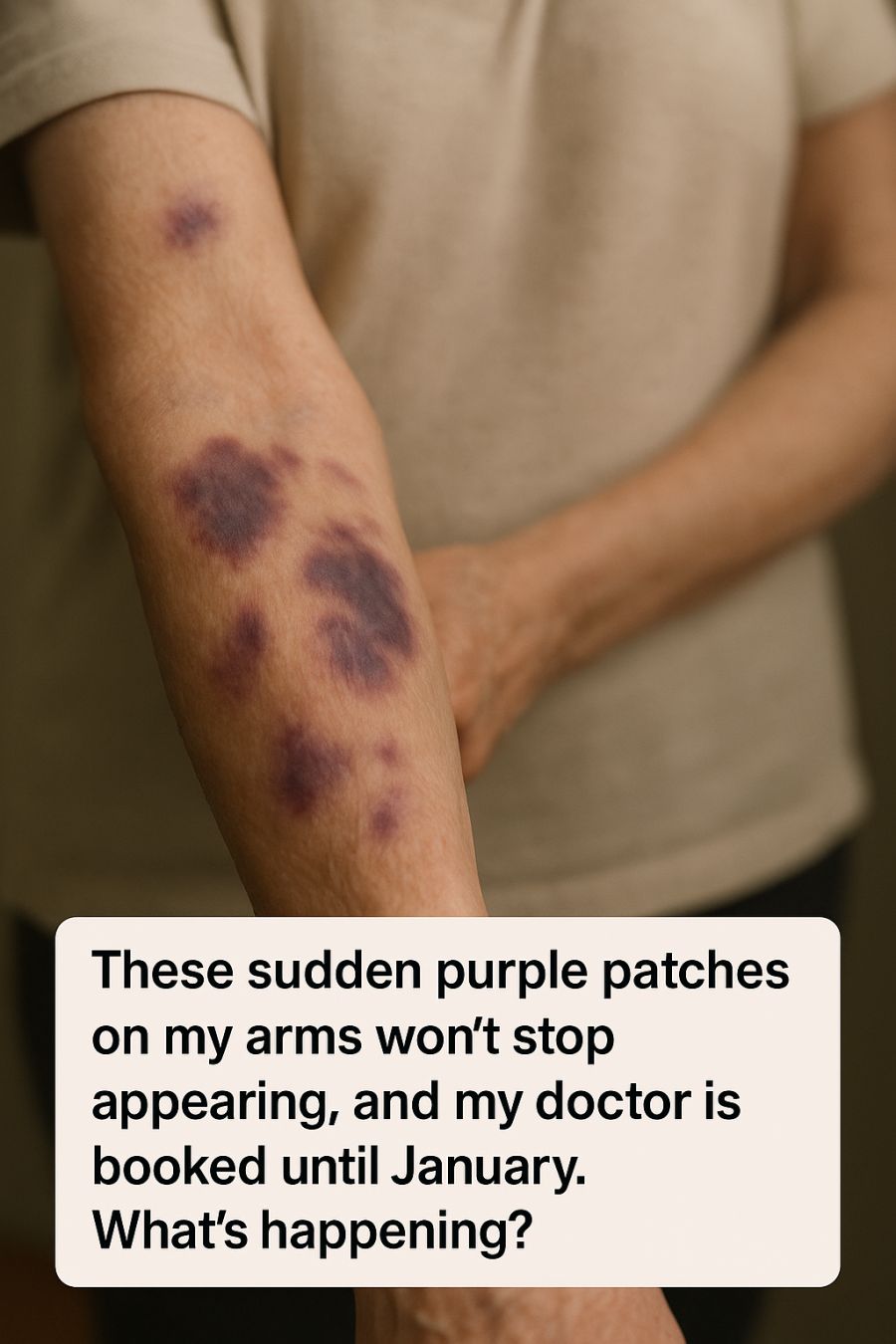
Sudden purple patches feel dramatic because they appear without warning. But in many cases, they reflect changes in skin and blood vessels rather than hidden catastrophe.
The most productive response is observation, documentation, and gentle care — not panic.
You’re doing the right thing by paying attention. Waiting for an appointment doesn’t mean doing nothing. It means gathering information so that when you sit in that exam room, you arrive prepared.
And preparation is a powerful form of control in situations that feel uncertain.
ADVERTISEMENT
