
ADVERTISEMENT
For decades, VapoRub has been a go-to remedy in many American households during cold and flu season. If you grew up with it, you probably remember someone rubbing it on your chest before bed.
But here’s the truth: many people use it out of habit rather than understanding how it works.
Using it correctly matters — especially for children.
Let’s break down what VapoRub can support, what it can’t do, and how to use it safely.
How VapoRub Actually Works
VapoRub contains active ingredients such as:
- Menthol
- Camphor
- Eucalyptus oil
These ingredients create vapors that stimulate cold receptors in the nose. That sensation may help you feel like you’re breathing more easily, even though it doesn’t physically open airways.
It’s a comfort product — not a medical treatment.
Understanding that distinction helps prevent misuse.
Common Misuse #1: Overapplying to the Chest
Many people apply a thick layer across the chest and throat.
The problem?
According to product labeling, VapoRub is intended for external use only and should be applied in a thin layer — not heavily coated.
For adults and children over 2 years old, follow label directions carefully. For children under 2, it should not be used unless advised by a healthcare professional.
Should You Avoid the Chest Entirely?
There is no official guidance that says adults must avoid applying it to the chest.
However:
- It should never be applied inside the nostrils
- It should not be used on broken skin
- It should not be ingested
Some pediatric specialists caution against excessive use near the upper chest in very young children because strong vapors may cause irritation.
Always follow age guidelines listed on the packaging.
A Gentler Alternative: Upper Back Application
Instead of applying directly near the throat area, some people find it more comfortable to apply a thin layer to:
- The upper back
- The neck area (avoiding the front throat)
Light application is key.
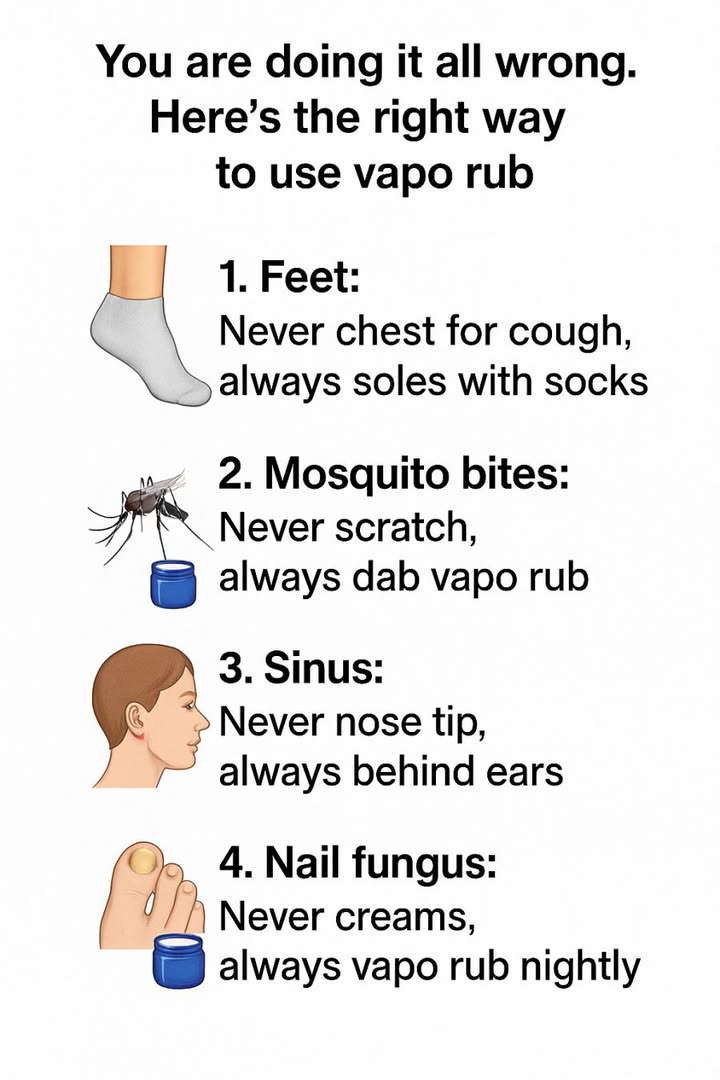
What About the “Feet Method”?
You may have seen viral claims suggesting that applying VapoRub to the soles of your feet stops coughing overnight.
There is no strong clinical evidence supporting this method as a cough treatment.
That said, massaging the feet before bed can promote relaxation, and wearing socks afterward may create warmth and comfort. If used, it should still follow safety guidelines and label instructions.
Comfort does not equal medical effectiveness.
Can It Help With Sinus Pressure?
Applying a small amount to the upper chest or back before bedtime may help you feel less congested because of the cooling vapor sensation.
Some people also apply a tiny amount behind the ears or along the upper neck area, but it must stay away from:
- Eyes
- Inside the nose
- Mouth
Always wash hands after application.
— See Next Page —
ADVERTISEMENT
