
ADVERTISEMENT
The idea of “aging backwards” often appears in headlines and social media posts. While aging itself is a natural process that cannot be reversed, nutrition can play an important role in how we feel as the years go by. Many researchers agree that diet may influence energy levels, skin health, brain function, and long-term wellness.
Certain foods are often described as “superfoods.” This term generally refers to foods that contain a high concentration of vitamins, minerals, antioxidants, and beneficial fats. These nutrients may help support the body’s natural repair processes and protect cells from everyday stress.
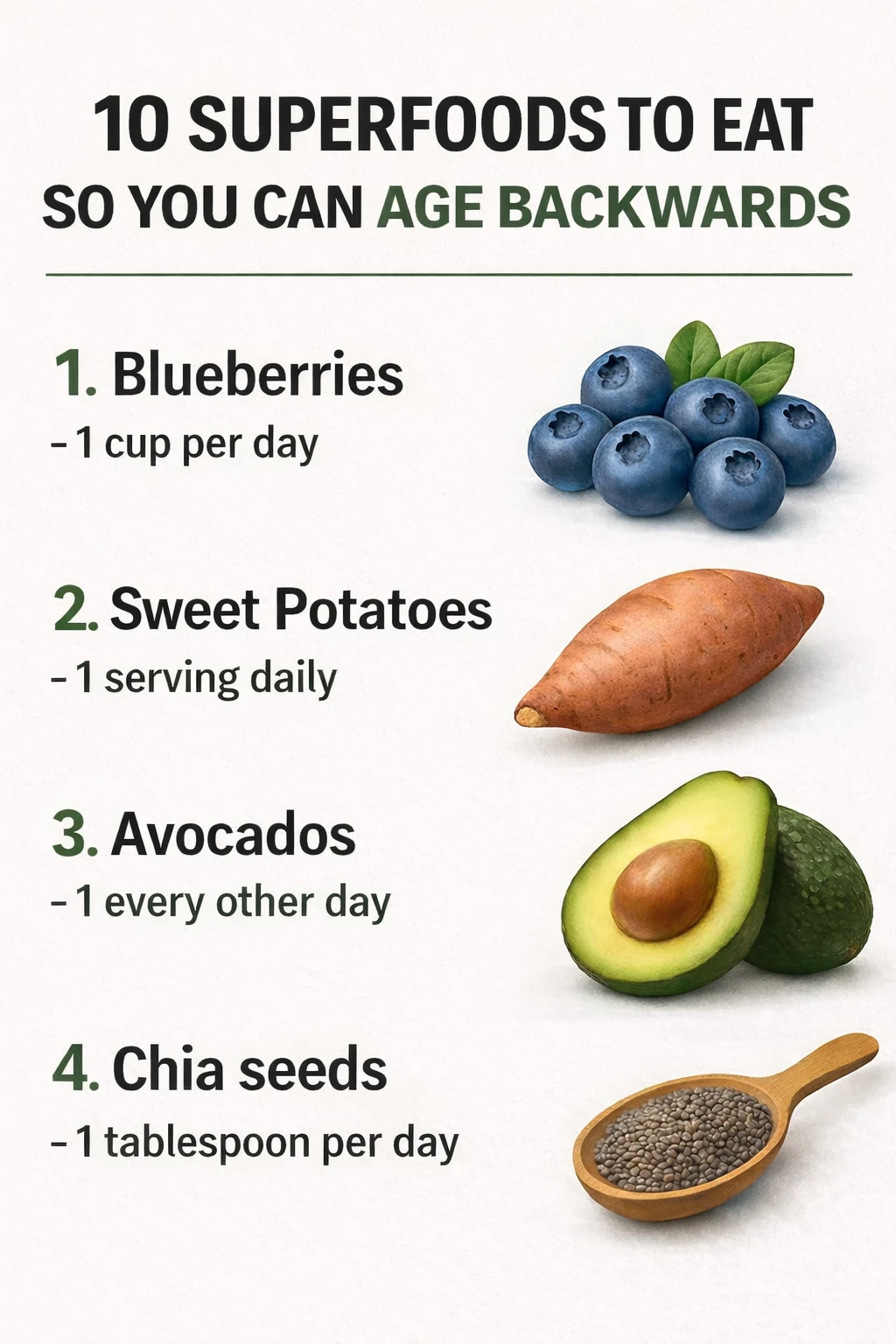
Below are ten foods frequently associated with healthy aging. While they cannot stop time, they may contribute to a balanced diet that supports long-term vitality.
Why Nutrition Plays a Role in the Aging Process
As the body ages, several biological changes gradually occur. Collagen production may decrease, metabolism can shift, and cells experience exposure to oxidative stress.
Oxidative stress happens when unstable molecules called free radicals interact with cells. Over time, this process may contribute to changes in the skin, joints, and other systems in the body.
Foods rich in antioxidants may help neutralize some of these molecules. In addition, healthy fats, fiber, vitamins, and minerals may support the body’s natural repair mechanisms.
A varied diet that includes fruits, vegetables, healthy fats, and whole foods is often associated with better long-term health outcomes.
1. Avocados: Healthy Fats That Support Skin and Heart Health
Avocados are widely known for their creamy texture and mild flavor. They are rich in monounsaturated fats, a type of fat often associated with heart health.
These fats may help maintain skin hydration and elasticity. Avocados also contain vitamins such as vitamin E and vitamin C, which contribute to skin health and may help protect cells from oxidative stress.
Many people add avocado to salads, toast, smoothies, or grain bowls to increase healthy fat intake.
2. Blueberries: Small Berries Rich in Antioxidants
They contain compounds called anthocyanins, which give blueberries their deep color. These antioxidants may help protect cells from oxidative stress and support overall health.
Blueberries also provide vitamin C, fiber, and several beneficial plant compounds.
Adding a handful to breakfast cereals, yogurt, or smoothies can be a simple way to include them in daily meals.
3. Chia Seeds: Tiny Seeds Packed with Nutrients
Chia seeds may appear small, but they contain several nutrients often associated with balanced diets.
They are a source of:
- omega-3 fatty acids
- fiber
- plant-based protein
- antioxidants
Omega-3 fats may support heart and brain health, while fiber can contribute to digestive health.
Chia seeds can be added to oatmeal, smoothies, yogurt, or soaked overnight to make chia pudding.
4. Sweet Potatoes: A Source of Protective Carotenoids
Vitamin A supports skin health, immune function, and vision. Beta-carotene also acts as an antioxidant that may help protect cells.
Roasted sweet potatoes, mashed versions, or baked slices can make a flavorful addition to balanced meals.
5. Salmon: Omega-3 Fatty Acids for Heart and Brain Support
Fatty fish such as salmon are widely recognized for their omega-3 fatty acid content.
Omega-3s may help support heart health and contribute to normal brain function. Salmon also provides protein, vitamin D, and selenium.
Some studies suggest that omega-3 fats may help reduce inflammation markers in the body.
Including salmon in meals a few times per week may help increase intake of these beneficial nutrients.
6. Spinach: Leafy Greens That Provide Essential Vitamins
Spinach is a nutrient-dense leafy green that contains several vitamins and minerals.
It provides:
- vitamin A
- vitamin C
- vitamin K
- iron
- magnesium
Spinach also contains antioxidants such as lutein and zeaxanthin, which are often associated with eye health.
Spinach can be added to salads, smoothies, omelets, or sautéed as a side dish.
— See Next Page —
ADVERTISEMENT
