
ADVERTISEMENT
Practical Habits That Help Keep Tuna Salad Safer
Food safety often comes down to a few consistent kitchen habits. When preparing and storing tuna salad, these practices may help reduce the risk of spoilage.
Prepare Smaller Batches
Making smaller portions can help ensure the salad is eaten within the recommended time window. This can also reduce the likelihood of leftovers lingering in the refrigerator for too long.
Serve Only What You Need
Label Containers With Dates
Adding a simple date label when the salad is prepared can make it easier to track how long it has been stored.
Many people find that this habit helps reduce uncertainty when deciding whether leftovers are still suitable to eat.
Common Mistakes That Can Shorten Shelf Life
Sometimes tuna salad spoils sooner than expected because of small storage mistakes.
Leaving It Out Too Long
Prepared foods should not remain at room temperature for extended periods. Even short periods outside the refrigerator can allow bacteria to multiply more quickly.
Using a Refrigerator That Is Too Warm
If a refrigerator runs above 40°F, foods may spoil faster. Periodically checking the temperature may help maintain safer storage conditions.
Storing It in Open Containers
Open bowls or loosely covered containers allow air and moisture to circulate, which can affect freshness and increase the chance of contamination.
Frequently Asked Questions
Can tuna salad last a full week in the refrigerator?
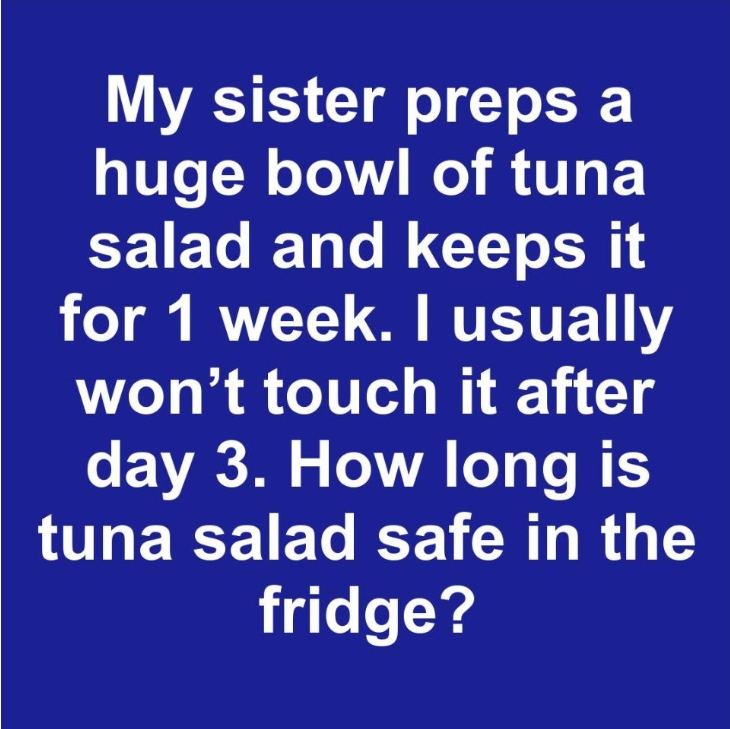
While some people keep it longer, many food safety guidelines suggest consuming tuna salad within 3 to 5 days for best quality and safety.
Does mayonnaise cause tuna salad to spoil faster?
Mayonnaise itself is relatively stable when refrigerated, but once mixed with other ingredients, the overall mixture becomes more perishable.
Can you freeze tuna salad?
How can you tell if tuna salad is still good?
Checking for unusual smell, texture changes, or discoloration can help determine whether it may have spoiled.
A Balanced Approach to Tuna Salad Storage
Tuna salad remains a convenient and nutritious meal option for many households. When prepared and stored carefully, it can be enjoyed safely over several days.
Following basic guidelines—such as refrigerating promptly, storing in airtight containers, and observing the 3–5 day window—can help maintain both quality and food safety.
If uncertainty arises, using your senses and prioritizing caution may help reduce the risk of foodborne illness.
With a few simple habits, tuna salad can remain a practical and enjoyable part of a weekly meal routine.
ADVERTISEMENT
