
ADVERTISEMENT
Why So Many People Pour Baking Soda Down the Sink (And What It Actually Does)
If your kitchen sink works hard every day, you’ve probably noticed the signs.
A faint odor that won’t go away.
Grease buildup around the drain.
Water that drains just a little slower than it used to.
That’s where a simple household staple comes in: baking soda.
Pouring baking soda down the sink isn’t just an internet trend. When used correctly, it can support regular sink maintenance, help reduce odors, and assist with light buildup — all without harsh chemicals.
Let’s look at why this method works, what it can realistically do, and how to use it properly.
Why Kitchen Sinks Develop Odors and Buildup
Your sink handles more than just water.
It regularly comes into contact with:
- Food particles
- Cooking oils and grease
- Soap residue
- Mineral deposits
- Bacteria that feed on organic matter
Over time, small particles cling to the inner walls of pipes. When organic material sits in a damp environment, odors can develop.
Mild clogs often begin as slow accumulation rather than a sudden blockage.
Routine maintenance helps reduce that buildup before it becomes a bigger issue.
The Science Behind Baking Soda
It works in a few helpful ways:
- It can help loosen light grease when combined with warm water.
- It neutralizes acidic odors.
- It acts as a gentle abrasive on sink surfaces.
- When combined with vinegar, it produces carbon dioxide bubbles that may help dislodge loose debris.
That fizzing reaction isn’t magic — it’s simple chemistry. The bubbling action can assist with minor buildup, especially near the drain opening.
However, it’s important to understand its limits. Baking soda supports maintenance. It does not replace mechanical drain cleaning for severe clogs.
Why This Method Appeals to So Many Households
Many people prefer baking soda because it is:
- Affordable
- Widely available
- Non-toxic
- Septic-safe when used moderately
- Gentle on most sink materials
Unlike some commercial cleaners, it doesn’t release harsh fumes. That makes it appealing for families looking for simpler cleaning options.
It also supports eco-conscious routines without sacrificing effectiveness for light maintenance.
What You’ll Need
To use baking soda effectively in your sink:
- ½ to 1 cup baking soda
- ½ to 1 cup white vinegar
- Hot (not boiling) water
- A sponge or brush
- A microfiber cloth
Step-by-Step: How to Use Baking Soda in Your Sink
- Rinse the sink with hot water to remove loose debris.
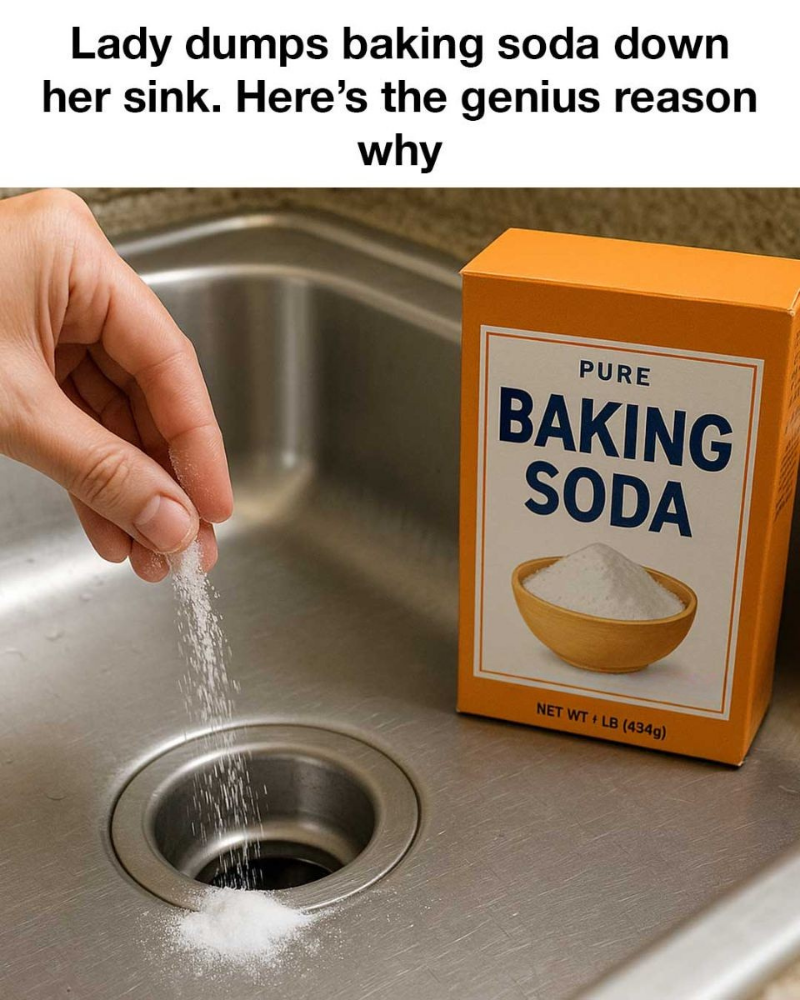
- Sprinkle baking soda directly into the drain and around the basin.
- Pour vinegar slowly into the drain.
- Allow the mixture to fizz and sit for 5–10 minutes.
- Flush with hot water.
- Wipe the sink dry with a microfiber cloth.
For surface cleaning, scrub the baking soda gently before rinsing.
This process may help reduce odor and light buildup when done regularly.
Why It Works Best as Maintenance
The key word is maintenance.
Baking soda and vinegar work best for:
- Odor control
- Light grease residue
- Preventative cleaning
- Mild, slow-draining sinks
They are less effective for:
- Heavy grease blockages
- Foreign object clogs
- Tree root intrusion
- Fully blocked drains
In those cases, mechanical tools or professional help may be necessary.
— See Next Page —
ADVERTISEMENT
