
ADVERTISEMENT
That Caught Me Off Guard: What Fingernail Ridges May Be Telling You
It often happens unexpectedly. You glance down at your hands and notice something new on your fingernails—small lines or ridges that weren’t there before. At first, it may seem like a cosmetic detail. But many people naturally begin to wonder if it means something more.
Fingernails can sometimes reflect changes happening in the body. While most nail changes are harmless and develop gradually over time, certain patterns may offer clues about nutrition, aging, or overall health habits. This does not necessarily mean there is a serious problem. In many cases, nail ridges simply appear as part of the natural aging process.
In this guide, we’ll explore what fingernail ridges are, why they develop, and what simple habits may help support healthier nails.
Understanding the Basic Structure of Fingernails
To understand nail ridges, it helps to know how fingernails grow.
Fingernails are made primarily from keratin, a strong protein that also forms hair and the outer layer of skin. The visible hard part of the nail is called the nail plate, which sits on top of the nail bed.
Nails grow from an area called the nail matrix, located just under the cuticle. This is where new cells form and push older cells forward, gradually creating the nail we see.
On average, fingernails grow about 3 millimeters per month, although growth speed can vary depending on:
- age
- diet
- circulation
- overall health
Because nails grow slowly, changes in the body may sometimes appear in the nails weeks or months later.
What Causes Ridges in Fingernails?
Ridges can form for several different reasons. In many situations, they are completely normal.
Common causes include:
- natural aging
- dryness of the nail plate
- minor nail trauma
- nutritional changes
- genetics
Daily habits—such as frequent hand washing, exposure to cleaning chemicals, or nail picking—may also influence nail texture over time.
Vertical Nail Ridges: Often a Normal Change
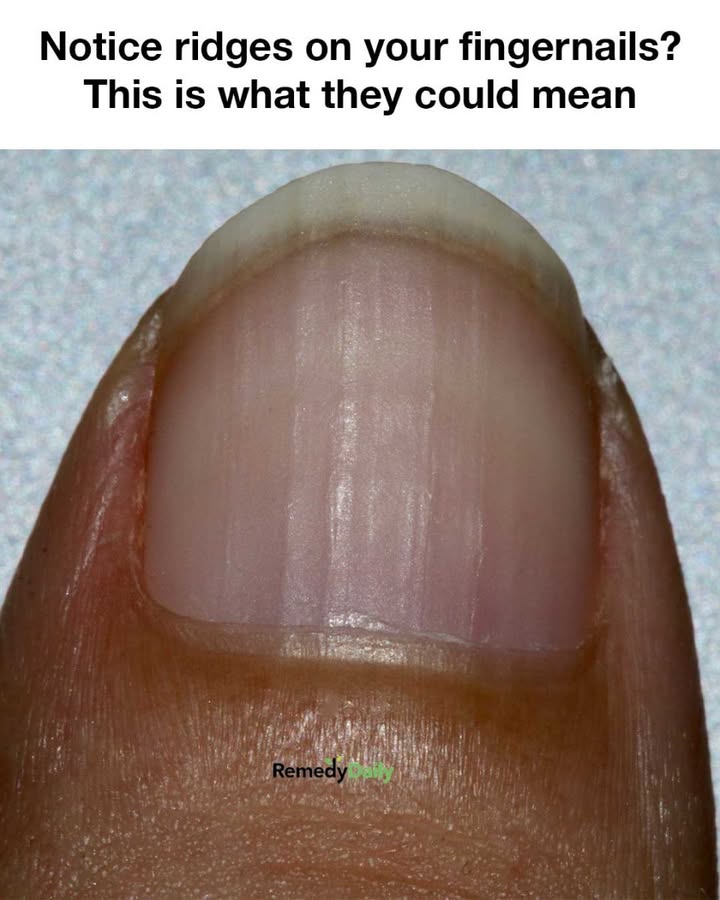
Vertical ridges run from the cuticle to the tip of the nail. These are the most common type people notice.
In many cases, vertical ridges develop gradually with age and are considered a normal change. They are often similar to wrinkles forming in the skin over time.
These ridges typically:
- appear thin and shallow
- develop slowly
- remain consistent across several nails
They usually do not cause discomfort and often require no treatment.
However, if vertical ridges appear suddenly or are accompanied by other nail changes, it may be helpful to monitor them.
Horizontal Nail Ridges: A Different Pattern
Horizontal ridges, sometimes called Beau’s lines, run across the nail from side to side.
Situations that may contribute to this include:
- physical stress on the body
- illness or fever
- injury to the nail matrix
- certain medications
Because fingernails grow slowly, these ridges often appear weeks after the event that triggered them.
In many cases, the ridge simply grows out with the nail over time.
How Aging May Affect Nail Texture
As people grow older, changes in nail appearance can become more noticeable.
Common age-related nail changes may include:
- vertical ridges
- slower nail growth
- increased dryness
- slightly thicker nails
These changes occur because the body gradually produces less natural oil and moisture in the nail bed.
Maintaining good hydration and gentle nail care may help support smoother nail surfaces over time.
The Role of Nutrition in Nail Health
Nails, like hair and skin, rely on nutrients to grow properly.
When the body lacks certain nutrients, nails may become more brittle or develop texture changes.
Nutrients that support nail health may include:
- iron
- zinc
- biotin
- vitamin B12
- protein
A balanced diet that includes fruits, vegetables, lean proteins, and whole grains can contribute to overall nail health.
In some cases, healthcare professionals may recommend nutritional testing if nail changes appear alongside other symptoms.
— See Next Page —
ADVERTISEMENT
