
ADVERTISEMENT
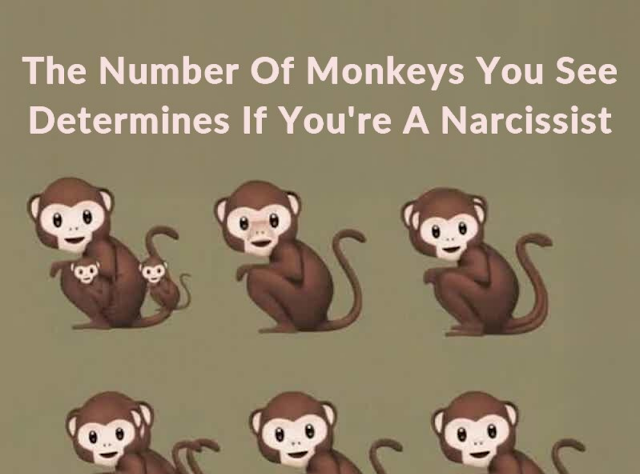
You’ve probably seen this image before. A grid of cartoon monkeys paired with a bold claim:
“The number you see determines if you’re a narcissist.”
Did I miss something?
What does this say about me?
This reaction is not accidental. These types of visuals are designed to capture attention and trigger curiosity. But before going any further, it’s important to clarify something essential.
A Necessary Reality Check
There is no scientific connection between counting monkeys in an image and narcissism.
Narcissistic Personality Disorder is a complex psychological condition. It can only be assessed through professional evaluation by trained specialists. It is not something that can be diagnosed through a visual puzzle or a quick internet test.
These viral images rely on emotional triggers. They use strong labels like “narcissist” to create engagement, comments, and shares. That doesn’t make them accurate.
So instead of focusing on the label, it’s more useful to explore what is actually happening when you look at the image.
Why People See Different Numbers
When you look at the monkeys, your brain is not just “seeing.” It is actively interpreting.
Attention Style
Some people naturally focus on the main shapes and obvious elements. Others are drawn to smaller, hidden details.
Cognitive Processing
Certain minds prefer patterns and structure. Others enjoy complexity and subtle variations.
Past Experience
If you’ve seen similar illusions before, your brain may search for hidden elements more quickly.
Current State
Fatigue, stress, or even your level of focus in that moment can change what you perceive.
Because of this, two people can look at the exact same image and see completely different numbers.
And both are correct.
What Your Perception May Suggest
Instead of making false claims, we can look at this more realistically.
- A strong ability to quickly understand the overall picture
- Efficiency in processing information
- Focus on clarity rather than complexity
If you noticed hidden monkeys or subtle details, it may suggest:
- Attention to nuance and small differences
- Patience in observation
- Curiosity toward deeper layers
Neither approach is better than the other.
In real life, both are valuable. A person who sees the big picture can make quick decisions. A person who sees details can detect problems others miss.
These are complementary strengths, not personality flaws.
Why These Images Go Viral
There are simple psychological reasons why these illusions spread so quickly:
Curiosity
People want to know if they missed something.
Self-Reflection
Even a simple image can feel like a test of how the mind works.
Social Interaction
Sharing results like “I saw 8” or “I found 12” creates conversation and connection.
This combination turns a simple visual into a shared experience.
The Number of Monkeys You See and What It Really Means
— See Next Page —
ADVERTISEMENT
