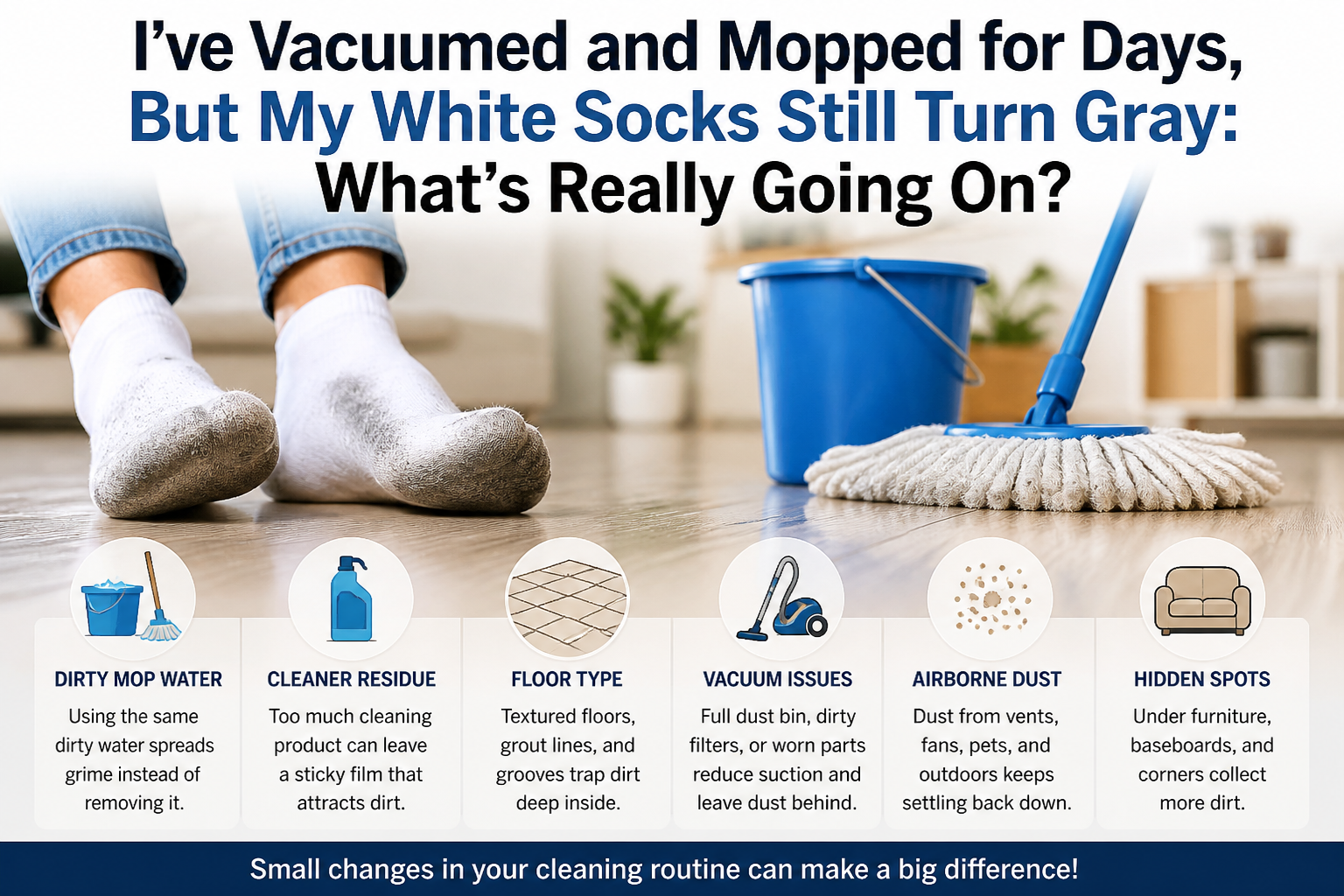
Your Flooring Type Could Be Hiding Dirt
Not every floor surface behaves the same way.
Some materials naturally trap debris.
Textured Vinyl Flooring
Small grooves collect fine particles.
Vacuuming may remove visible debris but leave material inside texture patterns.
Tile and Grout
Grout lines frequently hold dirt.
Even clean tile surfaces can leave surrounding residue.
Laminate Floors
Tiny seams and textured finishes may collect dust.
Hardwood Floors
Older wood flooring often develops small gaps where dust settles.
Your Vacuum Might Need Attention
Vacuums work differently depending on design and maintenance.
Sometimes machines remove larger debris while allowing fine dust to escape.
Things to inspect:
Filters
Dirty filters reduce performance.
Brush Roll
Hair buildup reduces cleaning efficiency.
Dust Bin
An overfilled container can affect suction.
Air Leaks
Worn seals can allow dust to re-enter the room.
Some vacuums also release very fine particles back into indoor air.
HEPA filters may help reduce this issue.
Air Inside Your Home May Be Part of the Problem
Many people focus only on floors.
But dirt sometimes comes from above.
Dust continuously settles from:
- Ceiling fans
- Air vents
- HVAC systems
- Curtains
- Pet activity
- Open windows
- Furniture surfaces
You clean.
Dust settles again.
Then socks pick it up.
This cycle creates the feeling that floors never stay clean.
Changing HVAC filters regularly and cleaning vents may help reduce dust circulation.
Areas Often Forgotten During Cleaning
Certain spaces quietly collect large amounts of debris:
Under furniture
Dust accumulates in hidden spaces.
Baseboards
Dust often settles against edges.
Entryways
Outdoor dirt enters homes every day.
Under beds
These areas may collect surprising amounts of lint and debris.
Simple Habits That May Help
Try these practical steps:
- Change mop water often
- Wash mop heads regularly
- Vacuum slowly rather than rushing
- Clean vents and fans
- Remove shoes indoors
- Wash pet bedding regularly
- Deep clean corners and hidden areas
- Mop with plain warm water occasionally
Small habits often make a bigger difference than repeated heavy cleaning.
Final Thoughts
If your white socks continue turning gray, it does not automatically mean your home is dirty.
Many clean homes experience the same issue.
Often the cause is not visible dirt.
It may be residue, trapped particles, airborne dust, or cleaning methods that unintentionally spread grime around.
Instead of cleaning harder, focus on cleaning smarter.
Sometimes one small adjustment can finally solve the mystery of the gray socks.