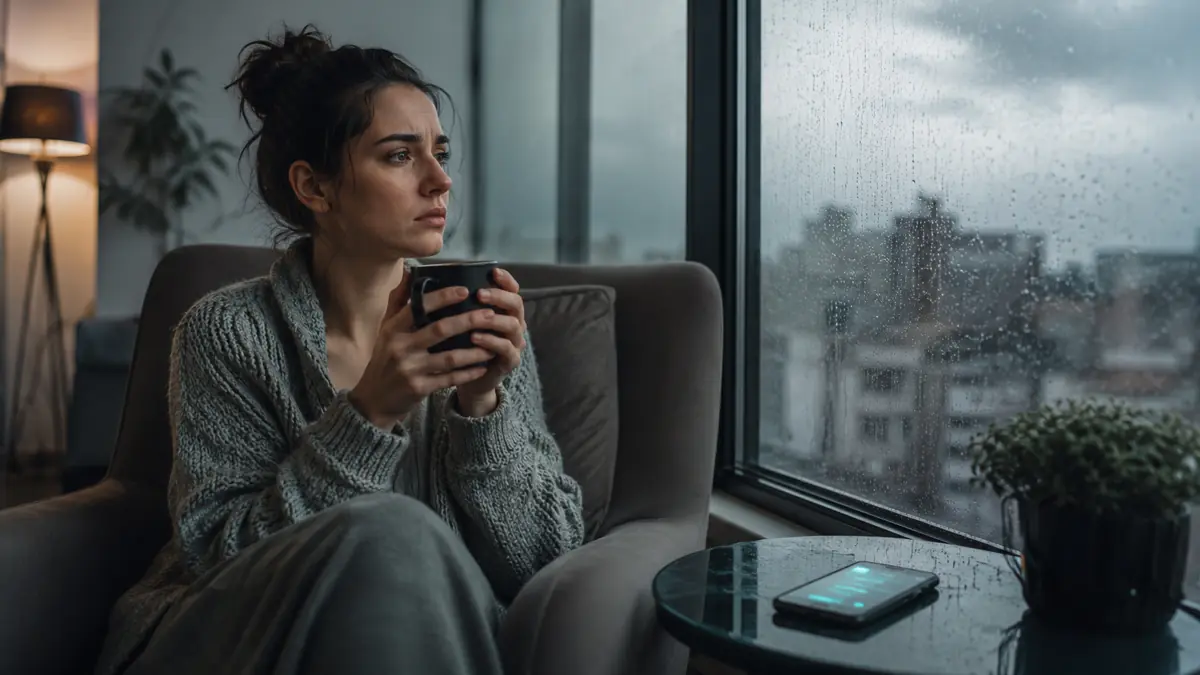
The Other Side
The divorce was finalized eight months later, on a Tuesday afternoon in July. My lawyer called me at 2:17pm. I was eating lunch at my desk. I thanked her, hung up, and finished my sandwich.
I tell people that part because it seems important — not as proof of strength, but as evidence of how thoroughly I had already grieved by that point. The legal ending was almost administrative. The real ending had happened months earlier, in an armchair by a window on a grey November Sunday.
Layla never reached out to explain. A mutual friend told me, carefully and with obvious discomfort, that she and my husband had ended things before the divorce was finalized. I received this information and filed it away without particular feeling. What she did after is her story to carry, not mine.
Mutual friends asked questions. I answered briefly and without drama, and I think some of them were disappointed by the absence of a scene. We live in a culture that has strong feelings about how betrayal should look — the fury, the public reckoning, the decisive moment of confrontation. I gave them none of it, and I understand that this made me harder to talk to about it.
What I could not explain, then, was that my silence was not absence of feeling. It was the opposite. It was feeling so much, so deeply, that I could not afford to spend any of it on them. Every piece of grief I had, I needed for myself.
I moved to a different city fourteen months after that Sunday morning. Smaller apartment. Quieter street. A city where no one knew the previous version of my life, which meant I could build the new one without constantly running into its ghost.

I have a circle of friends now that I chose more slowly, more carefully. I notice different things about people than I used to — not in a suspicious way, but in a more attentive one. I listen differently. I am slower to offer the deepest parts of myself, and I have made peace with the fact that this is not damage, it is discernment. There is a difference.
I have a plant on the windowsill that I remember to water. This sounds like a small thing. It is not a small thing.
There is a question people sometimes ask when they hear a story like this, the one that is really underneath all the other questions: Are you okay? And the honest answer, the one I have arrived at after a long time, is: yes. Not in spite of what happened, exactly, but partly because of what happened to me on the other side of it — who I discovered I was when the structure I had built my life inside was removed.
I am more careful now. I am quieter. I trust more slowly. But I also trust more surely, when I do, and I have learned that there is a version of myself that can sit in an armchair on a grey Sunday morning, with the world rearranging itself entirely, and remain still.
That version of me was always there. I simply did not know her until I needed her.
Some betrayals do not break you. They introduce you to yourself.
— End —