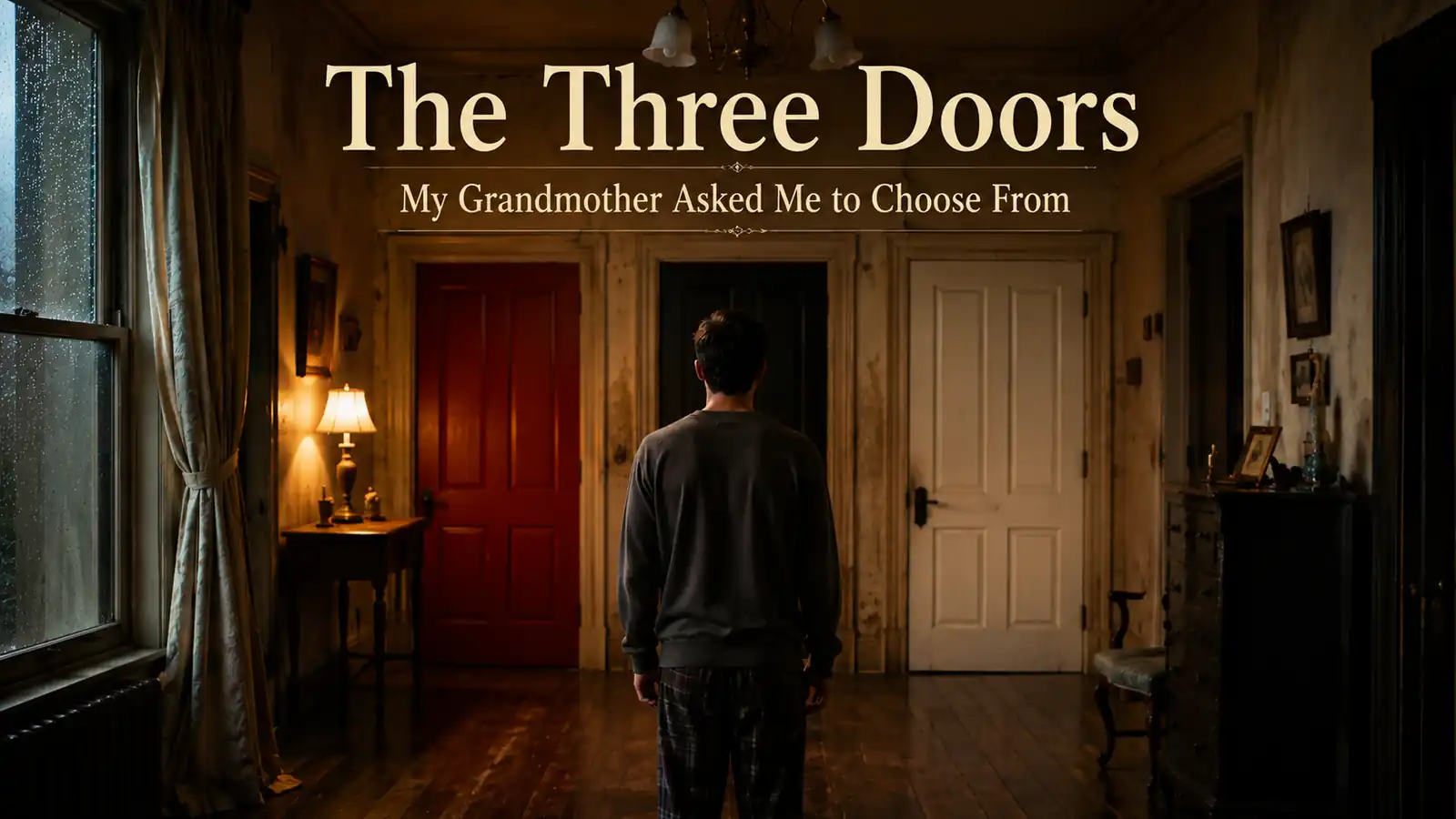
Life moved faster after that.
College.
Work.
Relationships.
Bills.
The strange thing about growing older is how easily important memories become buried beneath ordinary responsibilities.
Years passed before I thought seriously about the box again.
Sometimes I noticed it sitting quietly in my closet while searching for old clothes or winter jackets.
Every single time, I told myself:
“Not today.”
Part of me believed the envelopes carried something heavier than paper.
And somehow, I was right.
When I turned twenty-eight, my life began falling apart in ways I never expected.
My relationship ended after six years together.
Not because we stopped loving each other.
Sometimes love simply becomes exhausted.
Too many arguments.
Too many silences.
Too many moments where both people secretly feel lonely while sitting beside each other.
The apartment suddenly felt empty after she left.
I started working longer hours just to avoid going home.
Then my father became sick.
Nothing life-threatening at first.
But enough to remind me that parents do not stay young forever.
One night, after spending hours at the hospital, I returned home emotionally drained.
Rain tapped softly against the windows.
The same kind of rain from the afternoon Grandma asked me about the doors.
For reasons I still cannot explain, I walked directly to my closet.
And this time…
I opened the box.
The envelopes looked untouched despite all the years.
Red.
Black.
White.
My hands hovered over them.
I remembered choosing the red door when I was seventeen.
So I picked up the red envelope first.
Inside was a folded letter written in Grandma Nora’s delicate handwriting.
It read:
“If you chose the red door, you are someone who loves deeply.
You follow emotion before logic.
You protect people even when it hurts you.
But one day, your heart will become tired from carrying others.
When that happens, remember this:
Not everyone you save will stay.
And not every goodbye means failure.”
I stopped reading for a moment.
My chest tightened painfully.
Because somehow…
she was describing my entire life.
I continued reading slowly.
“People like you often blame themselves for things beyond their control.
You replay conversations.
You wonder if you could have loved harder, spoken softer, stayed longer.
But love is not measured by how much pain you can survive for someone else.
Real love must also leave room for yourself.”
By the time I reached the final line, tears blurred the page.
“Do not spend your whole life standing outside closed doors.”
I sat silently for almost an hour.
No one had ever understood me so clearly before.
Not even me.
The next morning, I visited my father at the hospital.
He looked tired but smiled when he saw me.
“You look awful,” he joked weakly.
“Thanks.”
“You’ve been working too much.”
I shrugged.
“Trying not to think.”
He studied me quietly for a moment.
“You know,” he said softly, “your grandmother used to worry about that.”
I looked up immediately.
“What do you mean?”
“She always said you carried emotions like stones in your pockets.”
That sentence stayed with me all day.
A week later, my father returned home safely.
But something inside me had changed.
I started slowing down.
Calling old friends again.
Taking walks without my phone.
Cooking meals instead of ordering cheap takeout every night.
Small things.
Human things.
Then one evening, while cleaning my apartment, I accidentally dropped the wooden box.
The black envelope slid halfway out.
For several minutes, I simply stared at it.
Part of me wanted to leave it untouched forever.
But curiosity eventually won.
The black envelope contained only a single photograph.
It showed Grandma Nora as a young woman standing beside a man I had never seen before.
On the back, she had written:
“The life I almost chose.”
Confused, I searched deeper inside the envelope and found another folded letter.
My hands shook while opening it.
“If you are reading this,” she wrote, “it means life has already taught you that love and happiness are not always the same thing.”
I frowned.
Then I kept reading.
“When I was twenty-three, I fell deeply in love with a man named Elias.
Before your grandfather.
Before children.
Before the life you know.”
I stared at the page in disbelief.
Grandma had never spoken about another man before.
“He wanted to travel the world,” the letter continued.
“He dreamed loudly.
He laughed loudly.
And he loved me in a way that felt impossible to forget.”
My heart pounded harder with every sentence.
“But I was afraid.
Afraid of uncertainty.
Afraid of disappointing my family.
Afraid of choosing the wrong future.”
“So I walked away.”
I could barely breathe reading the next line.
“And for many years, I convinced myself it was the right decision.”
The letter paused there briefly before continuing.
“Your grandfather was a good man.
He gave me stability, kindness, and safety.
I loved him honestly.
But a small part of my heart always wondered who I might have become if I had been brave enough to choose differently.”
I sat frozen on the floor.
Because suddenly, Grandma Nora no longer felt like the perfect wise grandmother from my childhood memories.
She felt human.
Real.
A woman who carried regrets quietly for decades.
At the bottom of the page, one final sentence waited for me:
“Fear can build prisons that look like safe homes.”
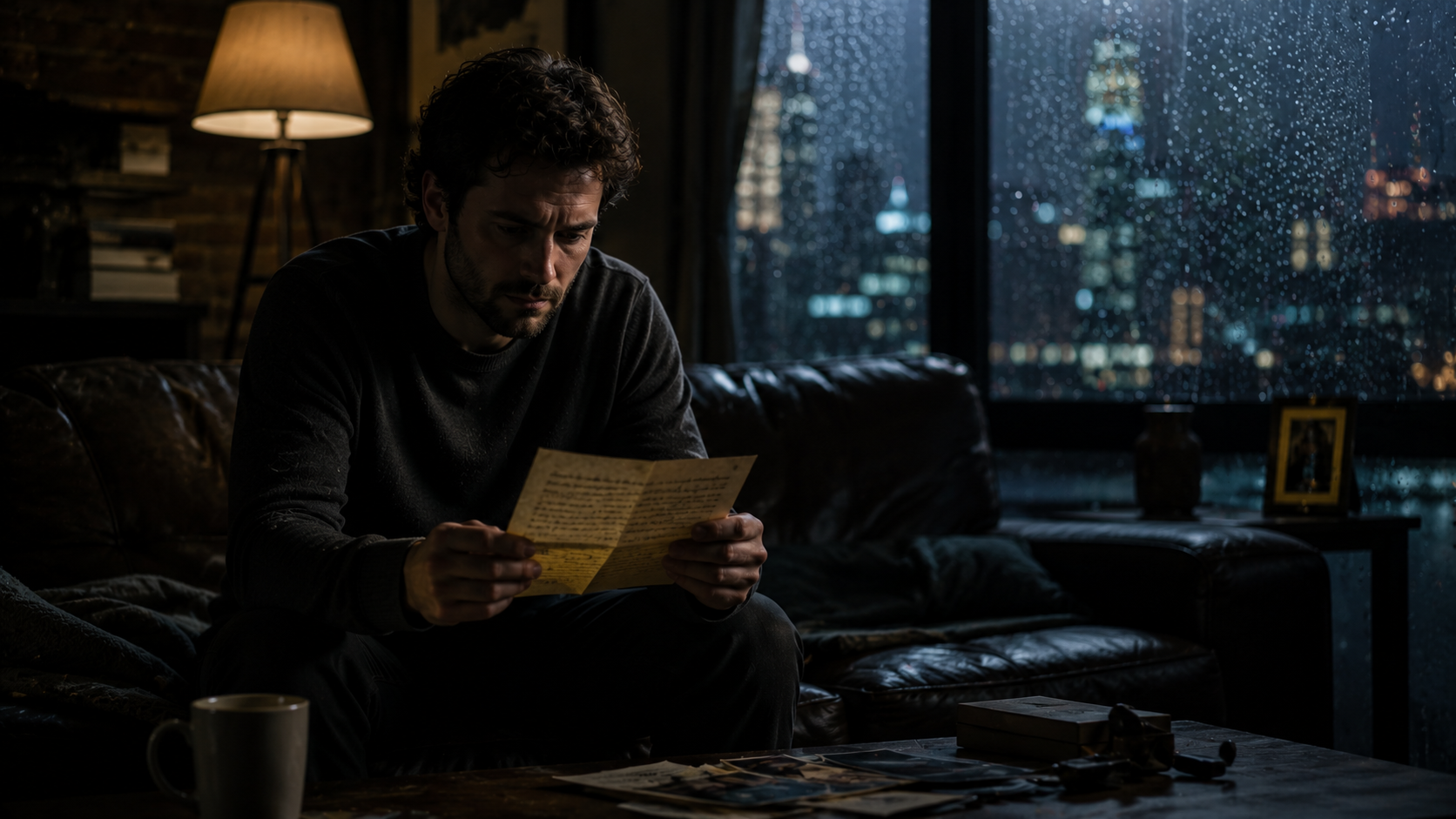
I read it again.
And again.
Then something terrifying hit me.
I was becoming exactly like her.
Avoiding risks.
Avoiding vulnerability.
Avoiding difficult conversations.
Choosing safety instead of honesty.
That night, I barely slept.
And just before sunrise, I finally reached for the third envelope.
The white one.
But before I could open it…
someone knocked on my apartment door.
And what waited outside would change everything forever.
— See Next Page —