
ADVERTISEMENT
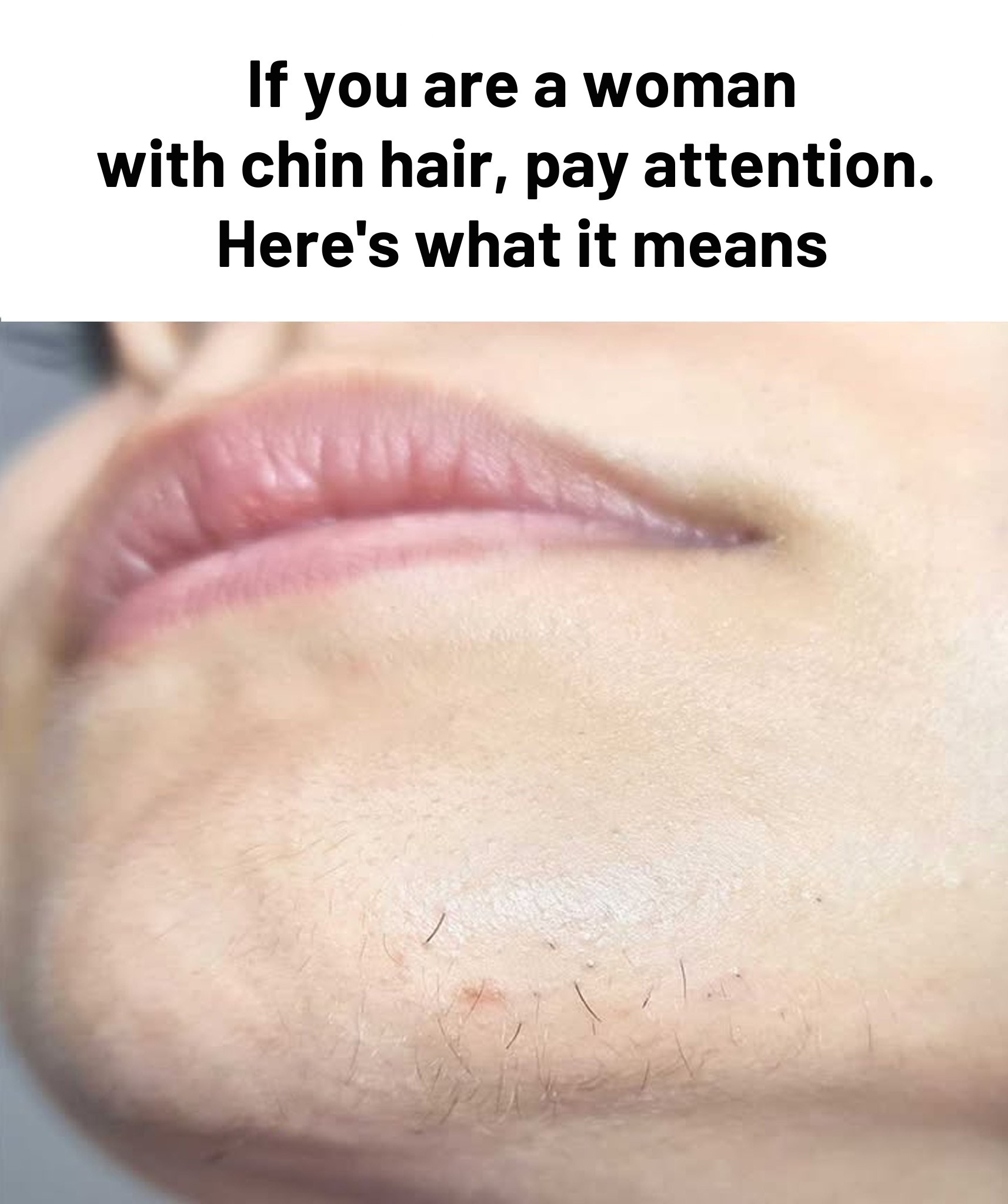
Noticing coarse, dark hairs on your chin or jawline can feel unsettling. Many women describe the moment the same way: one or two thicker hairs appear, then gradually more follow. It may start as an occasional pluck-and-forget situation, but over time it can raise questions.
Is this just aging? Hormones? Stress? Something more?
Understanding the difference supports confidence and informed decision-making.
The Real-Life Concern: Cosmetic Change or Health Signal?
For some women, a few coarse chin hairs appear during perimenopause or menopause. Estrogen levels decline while androgens (such as testosterone) remain relatively stable. That shift can lead to mild terminal hair growth in androgen-sensitive areas.
This is often benign.
However, sudden or rapidly increasing coarse hair—especially if accompanied by other symptoms—may warrant medical review.
The key question isn’t simply “Do I have facial hair?”
It’s “What pattern is this following?”
Normal vs. Notable: Setting Context
Common and Expected
- Occasional coarse hairs on chin or jaw
- Gradual increase during perimenopause
- Stable pattern over time
- No additional hormonal symptoms
Mild facial hair growth with aging is common and typically does not indicate disease.
Potentially Significant
- Rapid onset of thick, dark hair
- Expansion to chest, abdomen, or upper lip
- Acne concentrated along jawline
- Irregular menstrual cycles
- Scalp hair thinning
- Unexplained weight changes
Pattern, speed, and associated symptoms matter more than the presence of hair alone.
Hormonal Factors That May Contribute
Polycystic Ovary Syndrome (PCOS)
PCOS affects approximately 1 in 10 reproductive-aged women. It may present with:
- Irregular cycles
- Acne
- Insulin resistance
- Ovarian cysts
- Elevated androgen levels
Facial hair growth can be one feature among several.
Menopause and Perimenopause
Declining estrogen creates relative androgen dominance. This does not mean testosterone rises dramatically. It means the balance shifts.
Even small shifts may influence hair follicles.
Thyroid Dysfunction
Hypothyroidism can influence sex hormone-binding globulin (SHBG), potentially increasing bioavailable androgens. Fatigue, cold sensitivity, and weight changes may also occur.
Insulin Resistance
Elevated insulin levels may stimulate ovarian androgen production. This connection explains why metabolic health sometimes intersects with hair growth changes.
Medication Effects
Certain medications—including anabolic steroids, minoxidil, some progestin-based contraceptives, and specific psychiatric medications—may contribute to increased hair growth.
Genetics and Ethnicity Matter
Hair density varies across populations. Women of Mediterranean, Middle Eastern, South Asian, and Latin American descent may naturally experience denser facial hair without pathology.
Family history often provides helpful context.
Not all variation is medical.
When to Consult a Healthcare Provider
You may consider evaluation if:
- Hair growth increases quickly
- Hair appears in multiple androgen-sensitive areas
- Menstrual patterns change
- Acne worsens significantly
- You notice scalp thinning
- You suspect medication side effects
Evaluation does not assume a serious condition. It supports clarity.
Healthcare providers may recommend:
- Hormone testing (total/free testosterone, DHEA-S, SHBG)
- Thyroid function tests
- Metabolic screening
- Pelvic ultrasound if PCOS is suspected
Testing aims to rule out imbalance, not to pathologize normal variation.
— See Next Page —
ADVERTISEMENT
