
ADVERTISEMENT
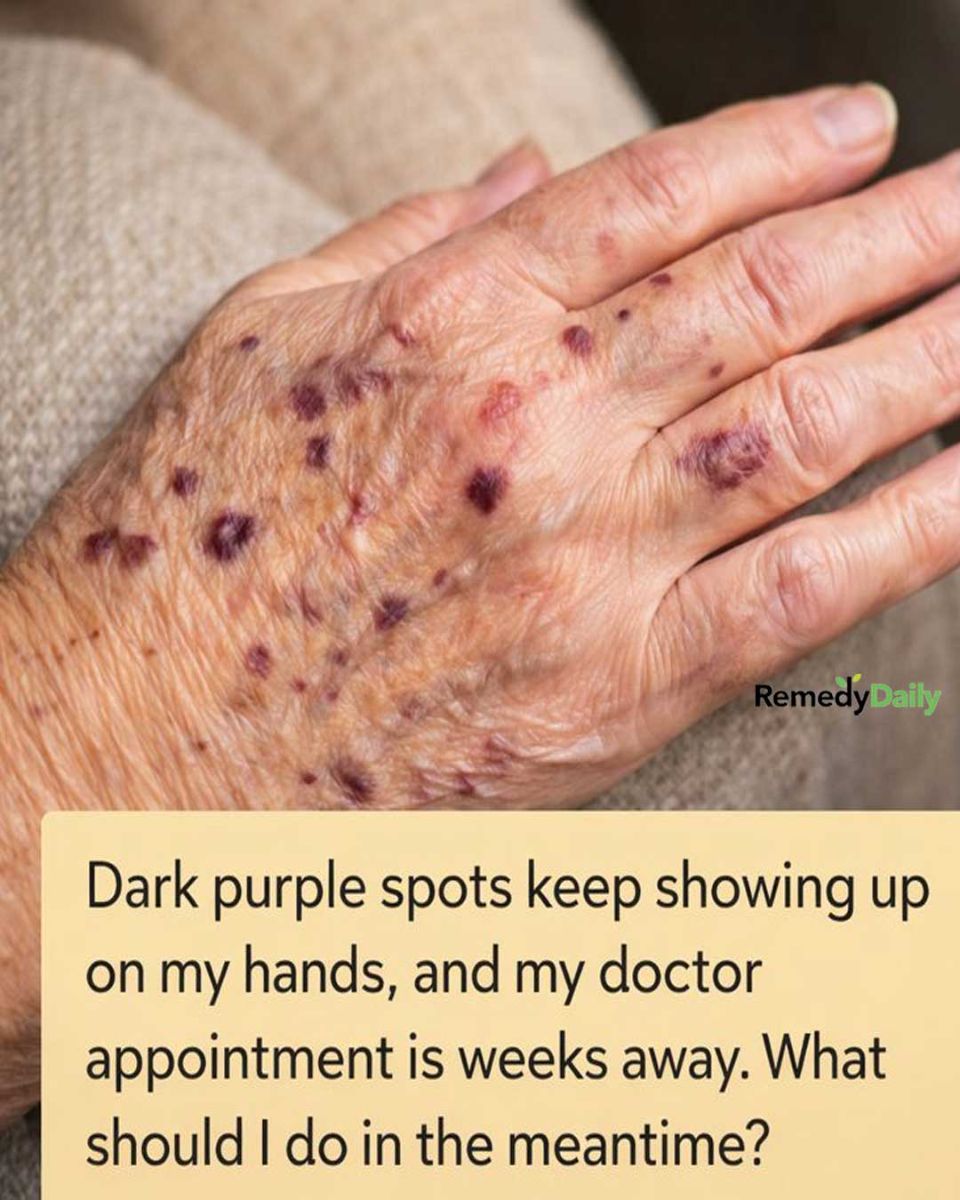
Seeing dark purple spots suddenly appear on your hands can be unsettling.
They may look like bruises. They may show up without a clear injury. And if your doctor’s appointment is weeks away, it’s natural to feel anxious in the meantime.
In many cases, purple spots on the hands are not dangerous. However, they do deserve thoughtful attention and monitoring. Understanding the most common causes — and knowing what warning signs to watch for — can help you stay calm and proactive while you wait to be seen.
Why These Spots Often Look Worse Than They Are
The skin on your hands is thinner than many other areas of the body.
As we age, the protective fat layer under the skin decreases, and blood vessels become more fragile. Even minor bumps — ones you may not even notice — can cause small blood vessels to break, leading to purple discoloration called purpura.
These spots:
- Often appear suddenly
- May look like flat bruises
- Are usually painless
- Fade slowly over days to weeks
They can look dramatic, but they are frequently harmless.
Actinic (Senile) Purpura: A Common Cause
One of the most frequent causes of dark purple spots on the hands and forearms is actinic purpura, sometimes called senile purpura.
It’s linked to:
- Years of sun exposure
- Thinning skin
- Fragile capillaries
Sun damage weakens connective tissue in the skin, making blood vessels more likely to leak under even mild pressure.
- Appear on the backs of the hands
- Are flat and irregular
- Do not itch or hurt
- Fade but may leave slight brown discoloration
While cosmetically frustrating, they are usually benign.
How to Tell If It Could Be Something More Serious
Although many cases are harmless, certain features deserve closer attention.
Be more cautious if the spots:
- Appear very suddenly and spread quickly
- Are accompanied by fever
- Occur with unexplained fatigue
- Are painful or swollen
- Bleed excessively
- Are associated with frequent nosebleeds or gum bleeding
These signs could suggest issues with blood clotting, platelet levels, inflammation of blood vessels (vasculitis), or other systemic conditions.
When Not to Wait
Seek urgent care if you experience:
- Chest pain
- Shortness of breath
- Severe weakness
- Rapid increase in bruising
- Bleeding that won’t stop
- Confusion or dizziness
These symptoms require immediate evaluation.
If your spots are stable and not accompanied by systemic symptoms, monitoring at home is reasonable until your scheduled visit.
One Important Step: Reduce Unnoticed Trauma
In the meantime:
- Avoid leaning heavily on hard surfaces
- Wear gloves during yard work or cleaning
- Be mindful of tight straps or elastic bands
- Rearrange cluttered spaces to prevent accidental bumps
Small adjustments can reduce new spots from forming.
Gentle Skin Care to Protect Fragile Skin
Thin, sun-damaged skin needs extra care.
Consider:
- Using fragrance-free moisturizers daily
- Avoiding harsh scrubs
- Skipping abrasive exfoliants
- Patting skin dry instead of rubbing
Moisturized skin is slightly more resilient and less prone to minor trauma.
Some dermatologists recommend vitamin C or retinoid products to support skin strength, but introduce new products cautiously and patch-test first.
— See Next Page —
ADVERTISEMENT
