
ADVERTISEMENT
A Strange U-Shaped Tool That Tells a Baking Story
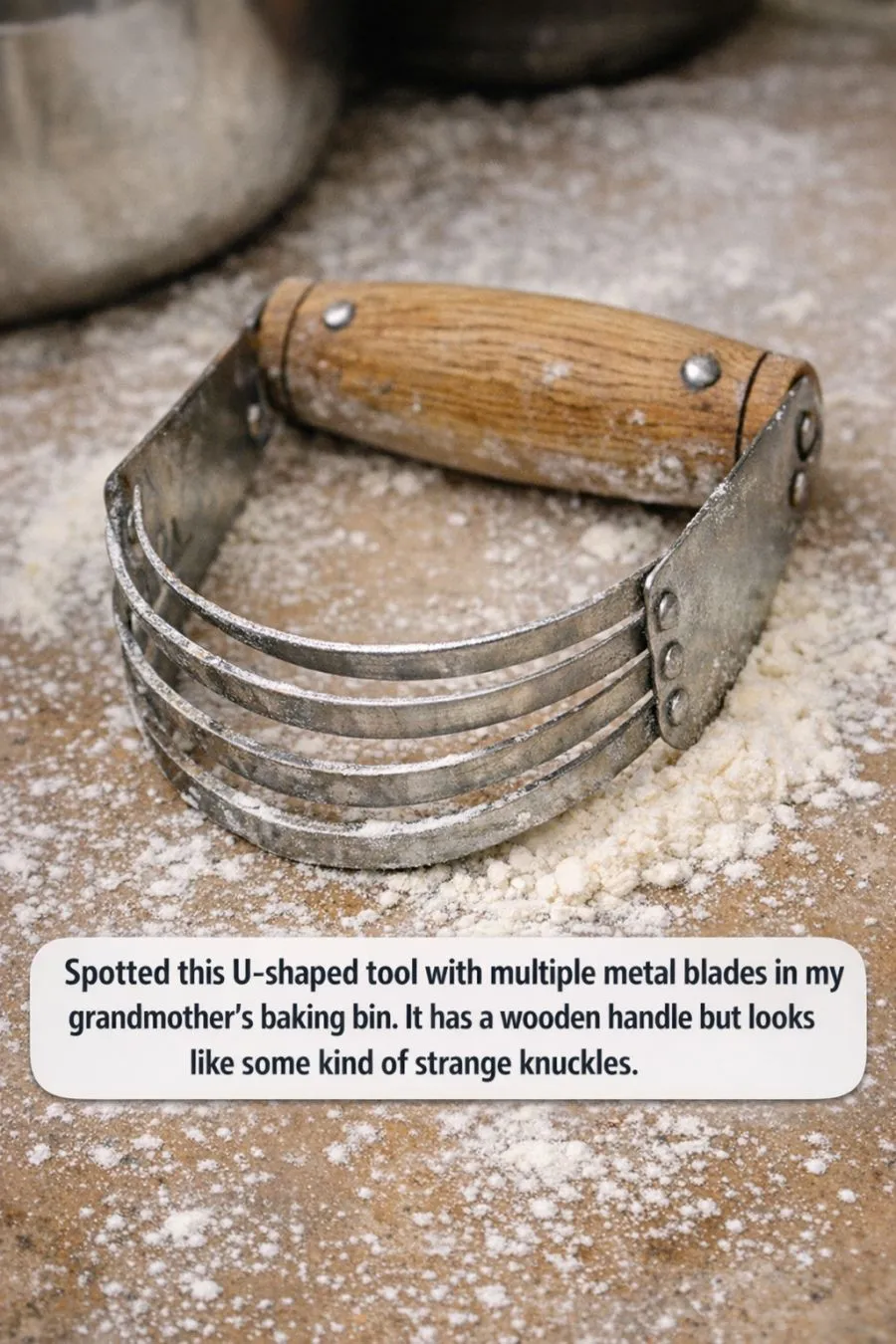
Finding an unfamiliar gadget in an old baking bin can feel like opening a small time capsule. Many kitchens hold tools that once played an everyday role but now seem mysterious. When you spot a U-shaped tool with a wooden handle and several metal blades, it may look more like something mechanical than culinary.
The first reaction is often confusion. The blades resemble a set of dull knuckles. The frame feels sturdy. It doesn’t slice like a knife, and it doesn’t scoop like a spoon. Yet the smooth wooden handle shows it was held often. This isn’t decorative. It’s a working tool.
Why Old Baking Tools Still Matter
Modern kitchens are filled with electric shortcuts. While these tools are efficient, they sometimes remove the tactile feedback that skilled bakers value. Vintage baking tools were designed to help control texture, temperature, and pressure by hand.
That level of control is especially important in pastry. Dough reacts quickly to heat and overmixing. A tool that allows gentle, consistent blending can contribute to lighter textures and more predictable results.
The mysterious U-shaped device belongs to that category. It isn’t strange once you understand its purpose. It is a pastry blender, one of the quiet workhorses of traditional baking.
A Closer Look at the Tool’s Shape and Design
A pastry blender typically measures about five inches across, with a handle shaped to sit comfortably in the palm. Several metal blades run parallel between the frame. These blades are not sharp. Instead, they are firm and slightly curved to support a rocking motion.
The spacing between the blades is intentional. It allows fat to be divided evenly into flour without smashing it flat. The gentle curvature helps the tool move smoothly through dry ingredients while maintaining control.
The wooden handle serves a practical function. Wood doesn’t conduct temperature the way metal does, making it comfortable to hold during extended mixing. The balance between the handle and blades supports steady pressure rather than force.
Meet the Pastry Blender
A pastry blender is designed specifically to cut cold fat into flour. This step is essential in creating dough for pie crusts, biscuits, and scones. The goal is to break butter or shortening into small pieces that stay distinct within the flour.
When baked, those small pockets of fat melt and release steam. This process helps create layers and tenderness. If the fat is blended too thoroughly, the dough becomes dense. If it melts too early, the texture suffers.
How It Works During Mixing
Using a pastry blender involves a simple rocking motion. The blades press down into cold butter and flour, dividing the fat into smaller pieces while coating them evenly. The mixture gradually resembles coarse crumbs.
This technique supports limited gluten development. Less gluten contributes to softer pastry. Overmixing, especially with machines, can encourage toughness. The pastry blender slows the process just enough to maintain control without sacrificing efficiency.
Many bakers find the rhythm of the motion intuitive. It offers visual feedback that helps determine when the mixture is ready.
— See Next Page —
ADVERTISEMENT
