
ADVERTISEMENT
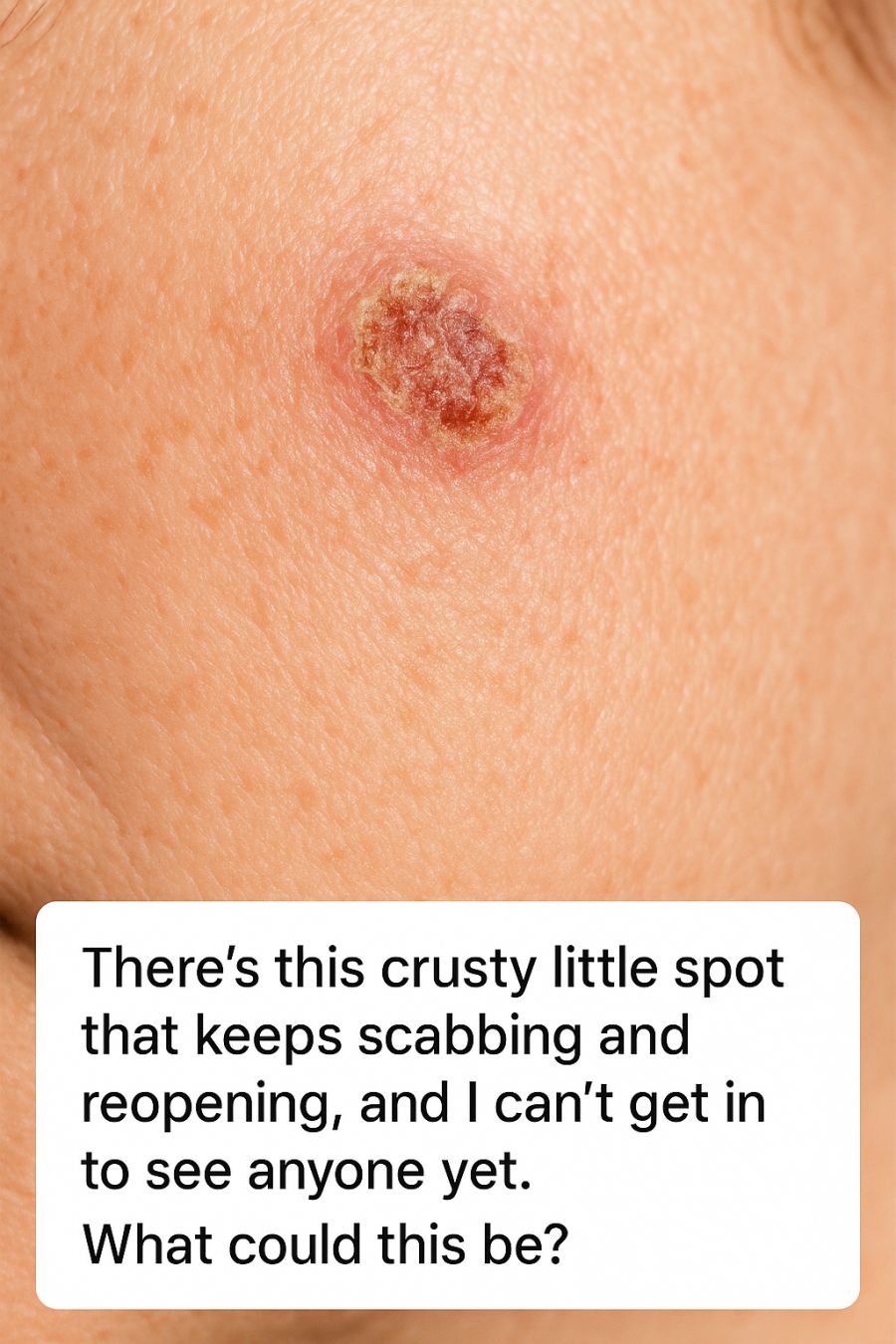
A Crusty Spot That Keeps Scabbing and Reopening: What It Could Mean
It’s easy to ignore a small spot on your skin at first.
Maybe it looked like a scratch. Maybe you thought it was just dry skin. But then it scabs… falls off… and comes back. Over and over again.
While many recurring crusty spots turn out to be harmless irritation, a lesion that doesn’t fully heal deserves attention. Not panic—but attention.
Understanding what it might be can help you monitor it wisely and care for it safely while you wait for an appointment.
Why a Persistent Scab Shouldn’t Be Ignored
Skin normally heals within a few weeks.
If a spot:
- Repeatedly crusts over
- Bleeds easily
- Doesn’t fully close
- Feels rough or thick
- Gradually changes appearance
…it may signal more than simple dryness.
Most of the time, these spots are related to chronic irritation or sun damage. But occasionally, they may represent a precancerous or early skin cancer lesion.
Early evaluation leads to better outcomes. That’s why noticing patterns matters.
Actinic Keratosis: A Common Explanation
One of the most common causes of a rough, crusty patch that won’t fully heal is actinic keratosis.
- Face
- Ears
- Scalp
- Chest
- Forearms
- Back of the hands
Actinic keratosis is considered precancerous, meaning it has the potential to develop into squamous cell carcinoma over time. However, not all lesions progress.
It often feels like:
- Sandpaper
- A small rough patch
- A persistent dry spot
- A crust that returns after healing
The texture is sometimes easier to feel than to see.
How Sun Damage Builds Over Time
UV exposure doesn’t cause immediate damage that you can see.
Instead, it accumulates gradually.
Over years:
- DNA damage can affect skin cells
- The skin’s repair processes weaken
- Abnormal cells may begin multiplying
Fair skin, light hair, and light eyes may increase risk, but anyone with significant sun exposure can develop sun-related skin changes.
When It Could Be Something More Serious
Although many crusty spots are benign or precancerous, some may represent early skin cancer.
Basal cell carcinoma and squamous cell carcinoma can appear as:
- Non-healing sores
- Crusted or bleeding spots
- Shiny or scaly patches
- Areas that reopen after appearing healed
Red flags include:
- Rapid growth
- Irregular borders
- Ongoing bleeding
- Increasing tenderness
- Significant color change
This doesn’t mean every recurring scab is cancer. It simply means persistent lesions deserve evaluation.
Other Possible Causes
Not all recurring scabs are sun-related.
Other possibilities include:
- Eczema
- Psoriasis
- Contact dermatitis
- Chronic irritation
- Allergic reactions
- Repeated friction
- Insect bites
Inflammatory skin conditions often cause itching or multiple patches.
A single isolated lesion that won’t resolve may lean more toward sun damage—but diagnosis requires professional evaluation.
What to Avoid While Waiting
It can be tempting to try trending remedies found online.
However, avoid applying:
- Lemon juice
- Baking soda
- Undiluted essential oils
- Harsh exfoliants
- Strong acids
These can disrupt the skin barrier and worsen irritation.
Gentle care is safer while you wait.
— See Next Page —
ADVERTISEMENT
