
ADVERTISEMENT
Most people rarely think about their sleeping position. At the end of a long day, the goal is simple: get comfortable and fall asleep. Some people lie on their back, others curl up on their side, and many end up on their stomach without even realizing it.
But the position you spend hours in every night can influence how your body feels the next morning. Many people wake up with stiffness, headaches, or lingering fatigue and assume it’s due to stress, age, or a bad mattress. In some cases, however, sleeping posture may contribute to these issues.
Understanding how different sleeping positions affect the body may help you make small adjustments that contribute to better rest.
Why Sleeping Position Matters More Than Many People Realize
A typical adult spends roughly one-third of their life sleeping. That means thousands of hours are spent in a relatively fixed posture.
When the spine, neck, and internal organs remain in a balanced position, the body may relax more easily. On the other hand, if a position places pressure on joints or compresses airways, it may lead to discomfort or interrupted sleep.
Some people notice warning signs such as:
- Waking with neck or shoulder tension
- Morning headaches
- Acid reflux at night
- Loud snoring
- Feeling tired despite a full night of sleep
These symptoms do not always come from sleeping posture alone, but the way the body is positioned during sleep can sometimes contribute to them.
The Potential Benefits of Sleeping on Your Side
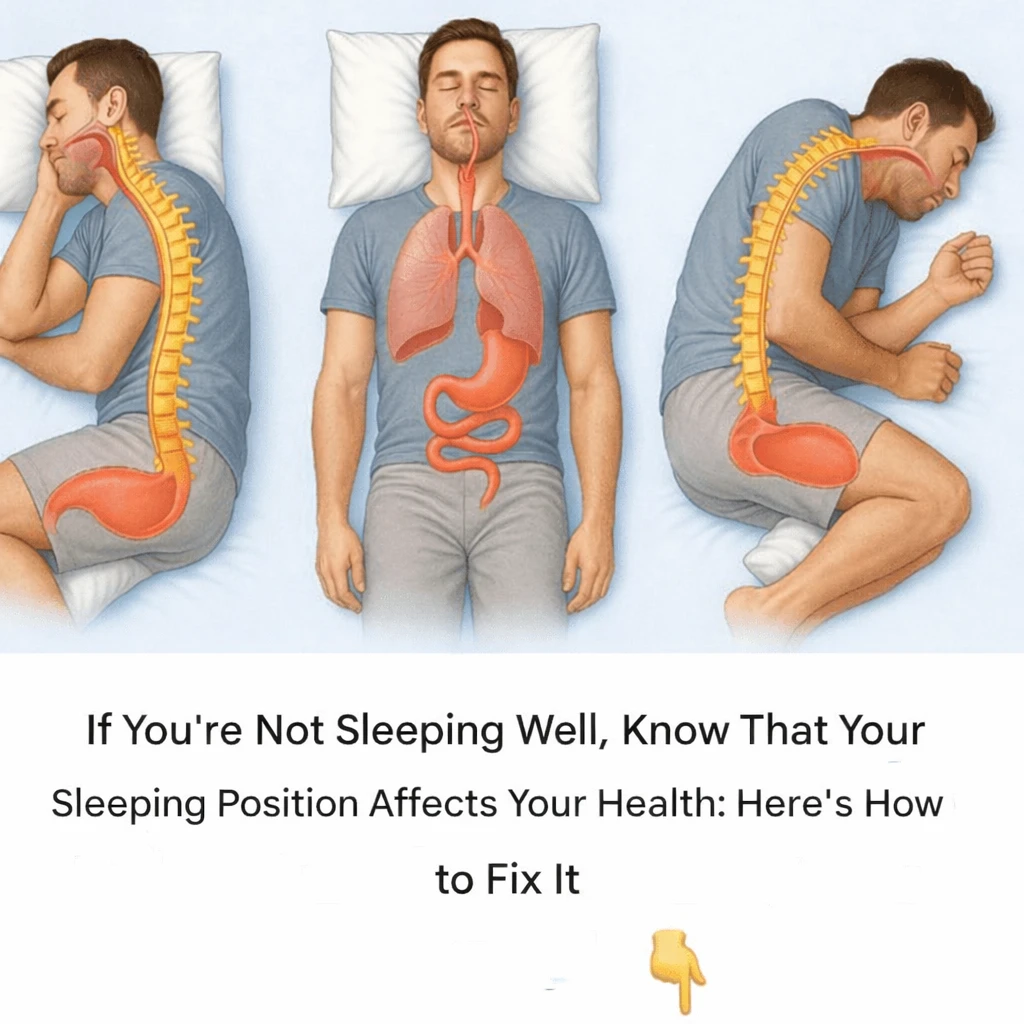
Many sleep specialists consider side sleeping to be one of the most balanced positions for the body.
When you sleep on your side, the spine can remain relatively neutral, especially if a supportive pillow keeps the head aligned with the neck. This position may also help keep airways more open compared to lying flat on the back.
Some studies also suggest that side sleeping may support certain nighttime body processes, including the movement of fluids that help the brain remove metabolic waste during sleep. This natural system, sometimes called the glymphatic system, continues to be studied for its potential role in long-term brain health.
Left Side vs. Right Side: Is There a Difference?
Many people naturally shift between sides during the night. However, some sleep experts note that sleeping on the left side may offer small advantages for certain individuals.
For example, left-side sleeping may:
- Help reduce mild nighttime acid reflux for some people
- Support digestion after late meals
- Encourage comfortable circulation during pregnancy
That said, comfort still matters most. If a position causes strain or discomfort, it may interrupt sleep rather than improve it.
How Other Sleeping Positions Affect the Body
Different sleeping positions influence the body in different ways.
Sleeping on Your Back
Sleeping on your back can help keep the spine aligned when the pillow supports the natural curve of the neck.
However, for some people—especially those who snore—this position may allow the tongue and soft tissues to relax backward, which can partially narrow the airway during sleep.
This may contribute to louder snoring or restless sleep for certain individuals.
Sleeping on Your Stomach
When lying face-down, the neck typically turns sharply to one side in order to breathe. Over several hours, this twist may place strain on the neck and upper spine.
In addition, the chest and abdomen are compressed against the mattress, which may make deep breathing slightly more difficult for some people.
Why Comfort and Alignment Are Both Important
No single position works perfectly for everyone. The key factor is whether the spine, neck, and hips remain supported and relaxed.
Supportive bedding, including a properly sized pillow and a mattress that maintains balanced pressure, may help maintain alignment regardless of sleep position.
When the body remains in a neutral posture, muscles can relax more effectively, which may support deeper sleep.
— See Next Page —
ADVERTISEMENT
