
ADVERTISEMENT
You wake up tired even after a full night of sleep. Your hands feel slightly numb. You lose balance for a moment and think nothing of it. These signs are easy to ignore. Many people blame stress, aging, or a busy lifestyle.
But sometimes, the cause is deeper.
Left unaddressed, it can affect nerve health and overall well-being. The encouraging part is that when detected early, it can usually be managed effectively.
Why Vitamin B12 Matters
Vitamin B12 plays several essential roles in the body:
- Supports red blood cell formation, helping prevent certain types of anemia
- Helps maintain healthy nerve function
- Contributes to DNA production and cell repair
- Assists in converting food into usable energy
The body cannot produce vitamin B12 on its own. It must come from diet or supplementation. Since the liver stores B12, deficiency can take time to appear, which makes it harder to notice early.
Who Is Most at Risk?
Some groups are more likely to develop low B12 levels:
- Older adults, due to reduced absorption
- Vegetarians and vegans, since B12 is mainly found in animal products
- People with digestive conditions that affect nutrient absorption
- Individuals taking certain medications such as acid reducers
- Those who have had weight loss surgery
- People with high alcohol intake, which may affect absorption and storage
Understanding risk factors can help identify the issue earlier.
Early Signs You Should Not Ignore
1. Persistent Fatigue
Feeling tired despite adequate rest may indicate that your body is not producing enough healthy red blood cells.
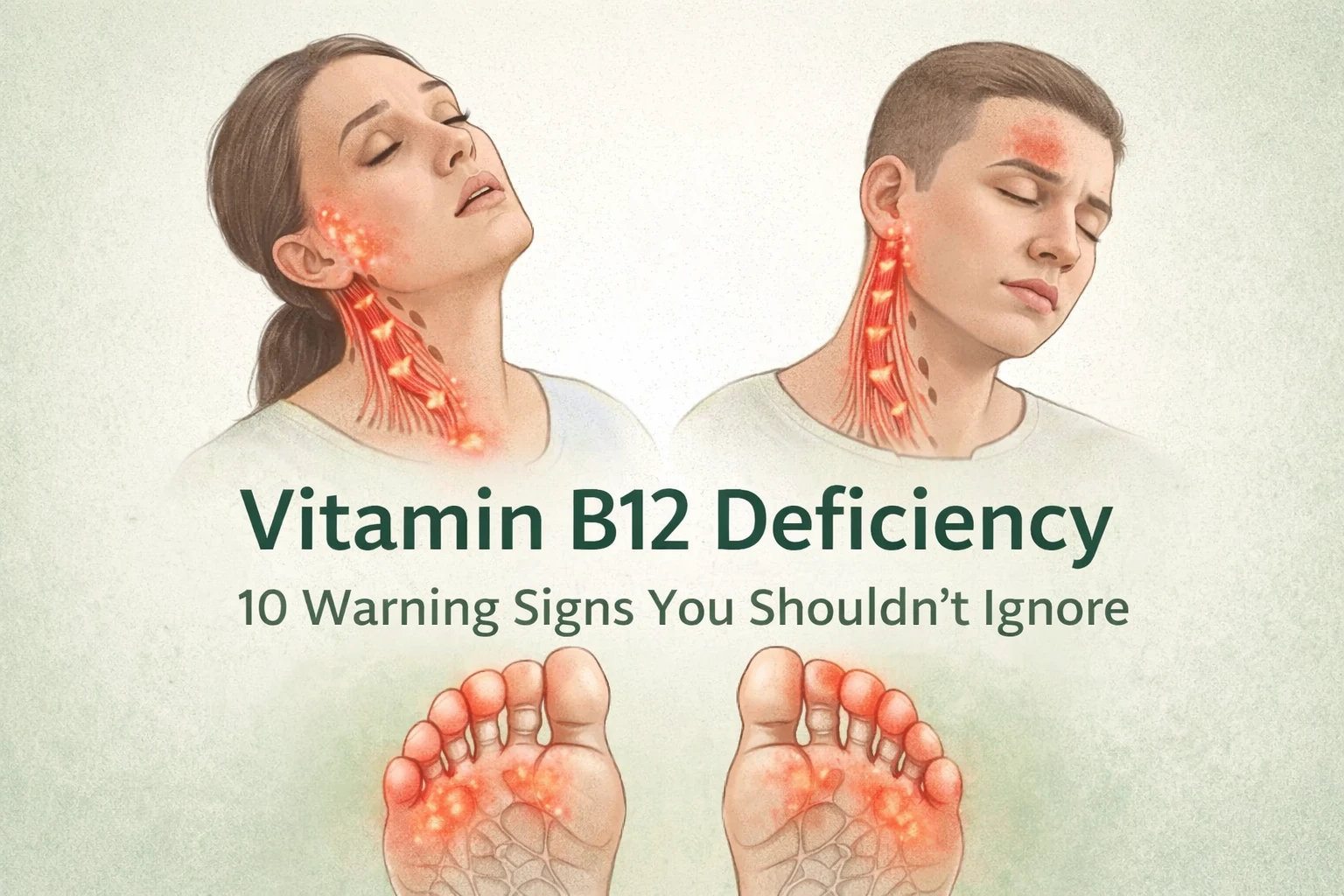
2. Tingling in Hands or Feet
A “pins and needles” sensation can appear when nerves are not properly supported.
3. Balance Issues
You may feel unsteady while walking or notice slight coordination problems.
4. Brain Fog
5. Pale or Slightly Yellow Skin
Changes in skin tone may occur due to reduced red blood cell production.
6. Smooth or Red Tongue
An inflamed or unusually smooth tongue can be an early sign.
7. Mouth Ulcers
Recurring sores in the mouth may appear in some cases.
8. Shortness of Breath
Even light activity may feel more tiring than usual.
9. Vision Changes
Blurred or unclear vision can occur if nerve pathways are affected.
10. Mood Changes
Low mood, irritability, or anxiety may be linked to nutrient imbalance.
These symptoms can vary from person to person and may appear gradually.
When to Take Symptoms Seriously
However, early awareness can make a significant difference.
Vitamin B12 Deficiency — The Silent Thief of Energy and Nerve Health
— See Next Page —
ADVERTISEMENT
