
ADVERTISEMENT
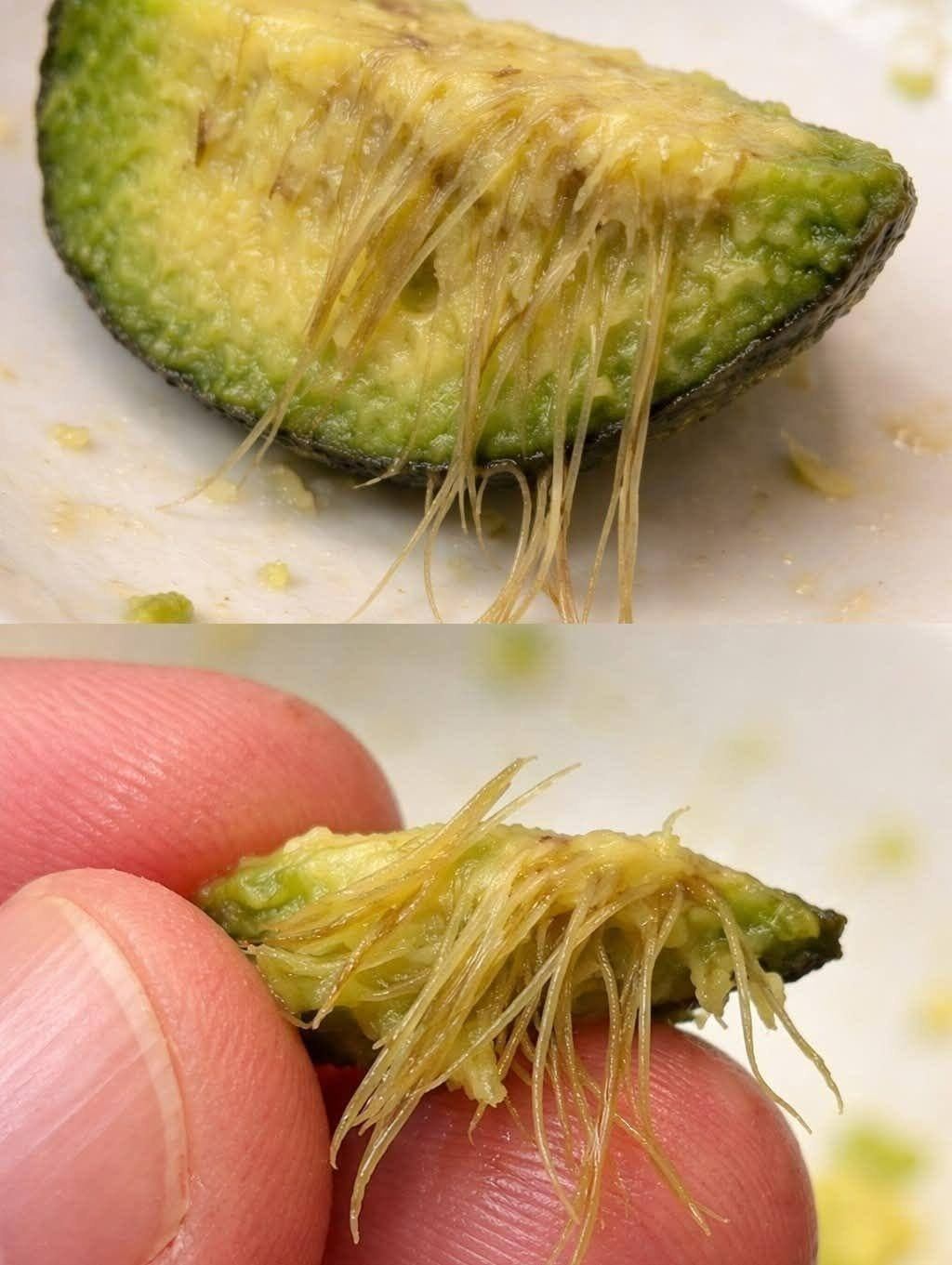
You slice open an avocado, expecting that smooth, buttery texture—and instead, you see thin strings running through the flesh. The outside looked perfect, the color seems fine, but the texture feels off. It can be disappointing, especially when you planned to use it for guacamole or avocado toast.
If this has happened to you, you’re not alone. Many home cooks come across stringy avocados from time to time and wonder if something is wrong with the fruit.
What Those Strings Inside an Avocado Actually Are
The stringy fibers inside an avocado are called vascular bundles.
These are natural structures within the fruit that function like tiny channels. During the avocado’s growth, they help transport:
- water
- nutrients
- sugars
from the tree into the developing fruit.
You can think of them as similar to the fibers in celery, although much finer and usually less noticeable.
In most avocados, these bundles blend smoothly into the flesh. However, under certain conditions, they can become more visible and slightly tougher, creating that stringy texture.
Why Some Avocados Become Stringy
Not all avocados have this issue. When it does happen, it’s usually linked to how the fruit developed or was handled before it reached your kitchen.
1. The Avocado Was Picked Too Early
This is one of the most common reasons.
Unlike many fruits, avocados ripen after being harvested, not on the tree. If they are picked too early, the internal structure may not fully develop.
2. Growing Conditions May Influence Texture
Environmental factors during the avocado’s growth can affect its final texture.
These may include:
- inconsistent watering
- temperature fluctuations
- soil nutrient levels
When a tree experiences stress, the fruit it produces may develop more pronounced fibers.
3. The Variety of Avocado Matters
Some avocado varieties are naturally smoother than others.
The most common variety in U.S. grocery stores is Hass avocado, which is typically known for its creamy texture. However, even within the same variety, texture can vary slightly depending on growing conditions.
4. The Fruit May Be Overly Mature
An avocado that has passed its ideal ripeness can develop changes in texture.
Instead of being creamy, it may feel:
- slightly fibrous
- dry or mealy
- uneven in consistency
5. Natural Variation in Fresh Produce
It’s important to remember that avocados are natural agricultural products.
Even fruits from the same tree can differ slightly in:
- texture
- ripeness
- fiber content
This kind of variation is normal and expected with fresh produce.
Are Stringy Avocados Safe to Eat?
Yes, they are generally safe to eat.
The strings are simply plant fibers, similar to those found in many fruits and vegetables. They do not indicate spoilage or contamination.
However, it’s still important to check for signs of a bad avocado, such as:
- a sour or unpleasant smell
- dark, mushy patches
- mold
If those signs are not present, the avocado is typically fine to consume.
How Stringy Texture Affects Your Cooking
While stringy avocados are safe, they may change the eating experience.
For example:
- guacamole may feel less smooth
- slices may not hold together as cleanly
- spreads may feel slightly fibrous
That said, there are ways to still use the avocado without wasting it.
— See Next Page —
ADVERTISEMENT
