
ADVERTISEMENT
Sudden Purple Patches Can Be Scary — Here’s What Might Be Happening
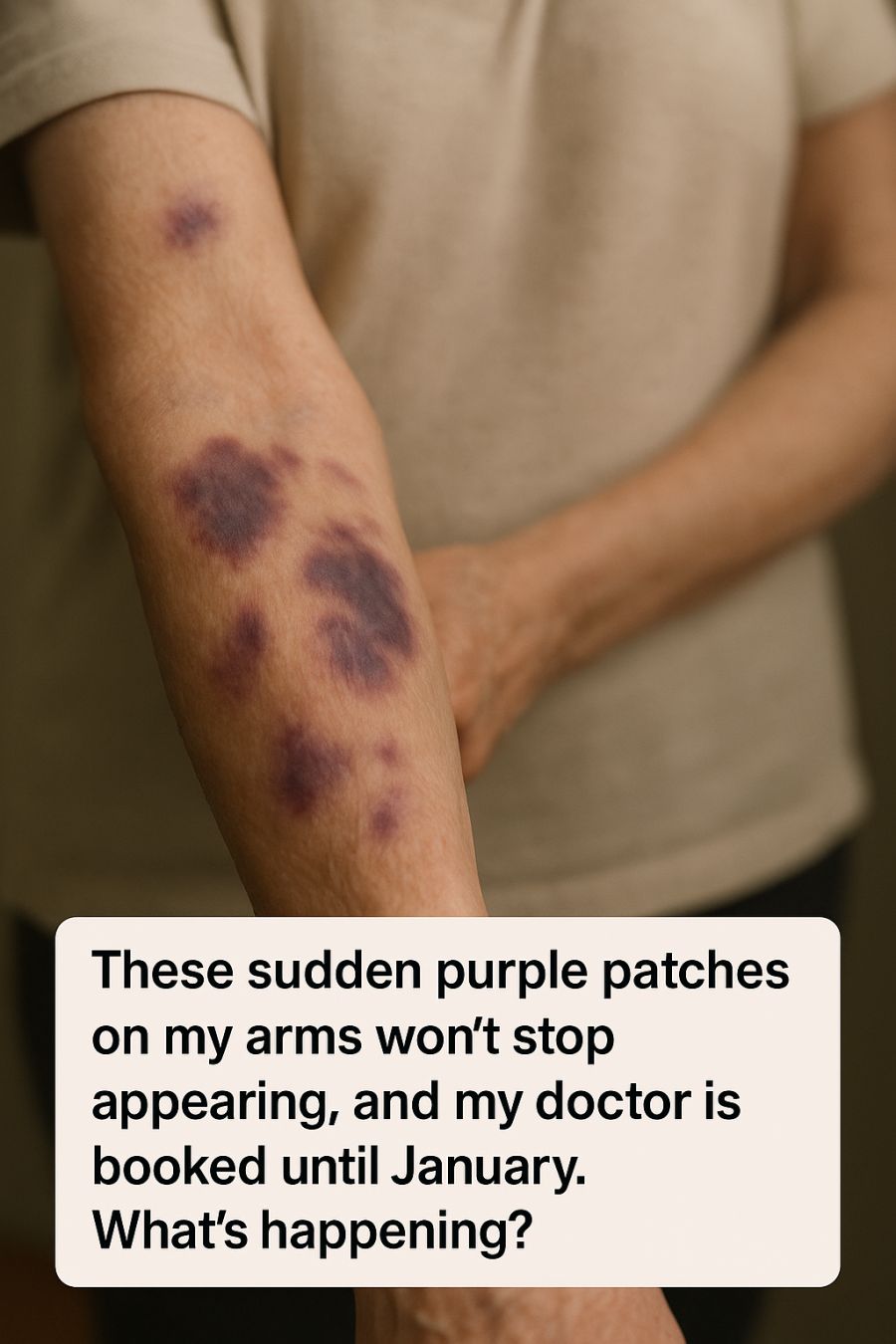
Seeing unexplained purple marks appear on your arms can feel alarming, especially when they keep coming back and you can’t get in to see your doctor right away. Most people jump to worst-case scenarios. The truth is that many causes of sudden bruising are common and often related to how skin changes over time.
That doesn’t mean you should ignore it. But it also doesn’t automatically mean something dangerous is happening.
The Real-Life Problem: Bruises That Appear Without a Clear Injury
The unsettling part is not remembering hitting anything. You wake up and there it is — a dark purple blotch that looks dramatic but didn’t hurt when it happened.
This disconnect between cause and effect is what worries people most. In many cases, the injury that caused the bruise was so minor that it didn’t register at the time. As skin becomes thinner and blood vessels more fragile, even light pressure can leave a visible mark.
The bruise feels sudden. The process behind it is gradual.
Why Skin Changes Make Bruising Easier
As the body ages, the structure of the skin shifts in quiet ways:
- Collagen decreases
- Fat padding under the skin thins
- Blood vessels lose some elasticity
- Sun exposure accumulates damage
These changes make the small vessels under the skin easier to break. When they do, blood leaks into surrounding tissue and forms the purple patch you see.
This type of bruising is often called age-related purpura. The name sounds dramatic, but it describes fragility, not disease.
It’s a cosmetic issue for many people, not a medical emergency.
Medications That Can Increase Bruising
Some medicines and supplements naturally affect how blood clots. When clotting slows, bruises form more easily and may look larger than expected.
- Aspirin
- Prescription blood thinners
- Ibuprofen and similar anti-inflammatory drugs
- Fish oil supplements
- Vitamin E
- Herbal products like ginkgo
This doesn’t mean these medications are wrong or unsafe. It means your skin may show their effects more visibly.
Tracking what you take — including supplements — is helpful information for your doctor later.
When Bruising Might Signal Something More
Most age-related bruising is harmless. However, certain patterns deserve attention while you wait for your appointment.
Pay closer attention if bruises are:
- Extremely large or spreading quickly
- Appearing on unusual areas (like the torso)
- Paired with nosebleeds or gum bleeding
- Accompanied by fatigue or fever
- Associated with unexplained weight changes
These signs don’t automatically indicate something serious, but they are worth documenting.
Observation is more useful than panic.
What You Can Do While Waiting
You don’t need to sit helplessly until January. There are simple ways to monitor the situation without trying to self-diagnose.
- Date it appeared
- Size and color
- Location
- Any activity before noticing it
- How long it takes to fade
Patterns are more important than single events. Your doctor will appreciate clear notes instead of vague memory.
— See Next Page —
ADVERTISEMENT
